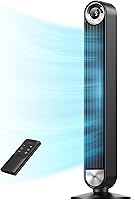
Can Tower Fans Cool a Room?
Yes, tower fans can cool a room, but they cool people, not the air. A tower fan moves air across your skin so you feel cooler, while a room's actual temperature stays the same unless outside air comes in.
On this page (8 sections)
- How does a tower fan cool you without chilling the air?
- Where should you place a tower fan for the best cooling?
- Does a tower fan lower the room temperature?
- When is a tower fan not enough to cool a room?
- What features make a tower fan better at cooling?
- Which tower fans suit different rooms?
- How do you keep a tower fan working well?
- So, can tower fans cool a room?
Yes, tower fans can cool a room, but they cool people, not the air. A tower fan moves air across your skin so you feel cooler, while a room's actual temperature stays the same unless outside air comes in.
That distinction matters before you buy one. A tower fan is a comfort device, and it works best when you aim it at where you sit or sleep rather than at the whole space.
Here's how to get the most from one.
How does a tower fan cool you without chilling the air?
A tower fan cools you through moving air, not refrigeration. Its motor spins a hidden bladed wheel that pulls air in at the base and pushes it out through the front grille as a steady stream.
That stream speeds up evaporation of sweat on your skin and helps your body shed heat. You feel cooler even though a thermometer in the same room reads the same number.
This is why a tower fan feels good on a warm afternoon but can't replace an air conditioner.
A tower fan's real value is convenience. The tall, narrow shape fits into a corner or beside a bed where a floor fan would get in the way.
Our guide to how to cool a room with a fan walks through the placement and airflow tricks that make the difference.
Where should you place a tower fan for the best cooling?
Place the tower fan where its airflow reaches you directly, and aim the stream at your body. A fan pointed into an empty part of the room cools nobody, so set it up near the spot where you sit, work or sleep.
Keep the intake at the base clear of curtains, furniture and walls. A blocked intake starves the fan and weakens the stream.
Leave a few inches of open space behind and around the base.
For a bedroom, set the fan on the floor beside the bed and angle it across the mattress rather than straight at your face. For a living room, put it where the air can travel across the seating area.
Point it slightly upward so the stream spreads out.
If the room has a window, a fan can also help pull cooler evening air inside. Face the fan away from the open window on the shaded side so it pulls cooler outside air in.
That way it starts to shift the room's actual temperature, not just how you feel.
Does a tower fan lower the room temperature?
No, a tower fan alone doesn't lower the room's air temperature. It moves existing air, and moving air doesn't remove heat.
Your room thermometer won't drop just because the fan is running.
The exception is when the fan brings in cooler air or pushes warm air out. Run a tower fan near an open window on a cool evening and it will pull in that cooler outside air.
Run it near an air conditioner and it spreads the cooled air further.
This is why a tower fan and an air conditioner make a good pair. The fan lets you set the AC a little warmer and still feel comfortable, because moving air makes the set temperature feel cooler on your skin.
You get comfort without running the compressor as hard.
It's also why a tower fan pointed at nobody is a waste. An oscillating tower fan that sweeps across a whole seating area is more useful than a fixed stream into a wall.
If you want the sweep to reach more people, compare an oscillating tower fan that covers a wide arc.
When is a tower fan not enough to cool a room?
A tower fan falls short when the air itself is already hot and humid. If the room is sealed and the air feels like a warm blanket, a fan just pushes warm air around your skin.
That can feel more uncomfortable than helpful once temperatures climb.
A tower fan also struggles in a big open space. A tall-ceilinged room or an open-plan living area gives the air stream a lot of room to spread and lose force.
In those spaces you need more airflow, or a fan aimed right at you.
If you're deciding between fan types, think about the room's size first. A tower fan for large rooms moves more air than a compact model.
For a bedroom or small office, a slimmer tower fan is plenty.
Humidity is the other limit. Fans help most when the air is dry and your sweat can evaporate.
In a muggy room, a fan's stream can feel sticky rather than refreshing, and a dehumidifier or AC does the real work.
What features make a tower fan better at cooling?
Oscillation, adjustable speeds and a decent airflow rating do the most for comfort. These features decide whether the fan's stream actually reaches you and stays pleasant.
Oscillation sweeps the airflow across a wide arc, so the fan cools more than one spot. Adjustable speeds let you match the airflow to the weather and the time of day.
A remote or timer helps you change settings without getting up.
The airflow figure tells you how much air the fan moves. A model rated around 262 cfm (cubic feet per minute) like the Lasko T42951 pushes a strong stream for its size.
Higher numbers mean more reach across a room.
A sleep or nighttime setting matters for bedrooms. It lowers the speed and dims the lights so the fan doesn't keep you awake.
Quiet operation counts too, since a noisy fan undercuts the comfort it provides.
Which tower fans suit different rooms?
Pick the fan by the room and how you'll use it. Three solid options cover most homes, and each one fits a different setup.
Best for whole-room cooling
The Honeywell QuietSet HYF290B is the most flexible pick for a living room or a shared bedroom. It's a 40-inch tower with 8 speed settings and a remote that nests in the back of the housing.
Honeywell says it's built for medium to large rooms without taking up much space. A digital timer with an 8-hour auto shut-off and 5 light dimming options adds convenience.
The reach-through handle makes it easy to move between rooms. Owners looking for a quiet, feature-rich tower fan will find this one does a lot for the money.
Best for bedrooms and night use
The Lasko T42951 42-inch is a good fit for a bedroom or home office. Its nighttime setting dims the LED controls and lowers the speed, so it can run while you sleep.
It's rated at 262 cfm and offers 3 speeds, a 7.5-hour programmable timer and a remote. At 10.6 pounds with a carry handle, it's light enough to move from room to room.
The 60-degree oscillation keeps the breeze coming back around instead of leaving long gaps.
Best for large rooms and strong airflow
The DREO Upgraded DC Tower Fan brings the most airflow of the three. DREO rates it at 28 ft/s wind speed and 1397 cfm, enough to stir the air in a large bedroom or living area.
It has 9 speeds and 4 modes, including a sleep mode that adjusts the speed and dims the display. A DC motor is designed to run quietly.
For a big room where a small fan would fade out, this is the stronger choice. Our Levoit tower fan review covers another quiet option if you're comparing brands.
How do you keep a tower fan working well?
Clean the intake and grille regularly and keep the base clear. Dust on the intake reduces airflow and makes the motor work harder for less cooling.
Wipe the outer grille with a soft cloth or vacuum it with a brush attachment. Check the base intake every few weeks during heavy use.
Unplug the fan before cleaning, and never spray water into the housing.
Keep the cord out of walkways and away from pets. A tower fan tipped over can be a trip hazard, and a damaged cord is a safety risk.
Stand it on a flat surface so it doesn't wobble.
Store it upright when the season ends. Wrapping the cord and covering the fan keeps dust out of the intake over the winter.
Before the next summer, give it a quick clean and test the settings.
So, can tower fans cool a room?
Yes, a tower fan cools the people in a room by moving air over their skin, and that's usually what you want. It won't lower the thermometer reading on its own, but it makes a warm room feel more bearable and spreads cooled or outdoor air when you place it well.
Pick the Honeywell QuietSet for whole-room flexibility, the Lasko T42951 for quiet nights, or the DREO DC fan when a large space needs stronger airflow. Set it up where the stream reaches you, keep the intake clear, and pair it with an open window or AC when the air itself is hot.
For more placement tips, read how to cool a room with a fan.
Frequently asked questions
Is a tower fan or a box fan better for cooling a room?
A box fan moves more air for its size and is cheaper, while a tower fan fits in tight floor space and often adds oscillation and a remote. Pick a tower fan when space and features matter, and a box fan when you want the most airflow for the money.
Can I leave a tower fan on all night?
Yes, many tower fans are designed for overnight use and some have a sleep or nighttime setting. Check the maker's instructions for your model, keep the cord clear of foot traffic, and avoid pointing the fan directly at your face all night.
How far should a tower fan be from me?
Place it about 6 to 10 feet away so the airflow reaches you without feeling like a harsh blast. A fan too close mostly moves air past your face, while a bit of distance lets the stream spread out across the room.