How Do You Cool a Room with a Fan?
To cool a room with a fan, move air across the occupied space and toward you, and bring in cooler outdoor air when conditions allow. Choose a fan that suits the room, block direct sun, and reduce indoor heat sources.
On this page (9 sections)
- How to cool a room with a fan: where should you start?
- Which fan style suits your room and routine?
- Should a fan face in or out of a window?
- How do you set up a fan for a more comfortable breeze?
- How can you make a room cooler while the fan runs?
- What common fan cooling mistakes should you avoid?
- Can you use a fan to blow cold air?
- How do you care for a room fan?
- Which fan should you choose to cool your room?
To cool a room with a fan, move air across the occupied space and toward you, and use cooler outdoor air when conditions allow. For how to cool a room with a fan comfortably, choose a style that suits your layout, block direct sun, and keep the airflow path clear.
A fan doesn't lower the room's air temperature on its own. It moves air over your skin, helping sweat evaporate, or can exchange indoor air with cooler outdoor air when you set it up for ventilation.
How to cool a room with a fan: where should you start?
Aim the fan so its airflow reaches the area where people spend time. Keep the path open, then adjust the fan's position, direction, or speed until you feel a steady breeze.
Set it on a stable surface and keep the cord out of walkways. A fan placed behind furniture or aimed into a wall can leave the occupied part of the room still and warm.
In a room with several seats, try directing air across the seating area instead of at only one spot.
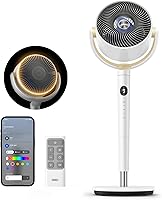
A tower fan suits rooms where you want several speed choices and airflow that sweeps across an area. The DREO tower fan offers 9 speeds, 4 modes, and 90° oscillation.
Its rear grille can be removed for cleaning. Its display dims after 30 seconds.
Choose this style if you want a tall, free-standing fan with settings for a gentle breeze or stronger airflow. Skip it if you mainly need a compact fan you can tilt toward a specific section of the room.
Which fan style suits your room and routine?
Choose a circulator when you want to direct airflow around the room, and a tower fan when you want oscillation and more speed settings. Room shape, furniture, and the people using the space matter as much as the fan's headline airflow figures.
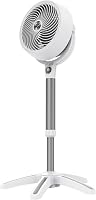
The Vornado 630 is a compact circulator with an adjustable tilt head and three manual speeds. Its 6 ft cord and 5.8 lb weight make it a practical choice when you need to move the fan between nearby locations, provided the cord can reach safely.
Pick this circulator if you want to point airflow up, down, or across the room without choosing among many modes. Skip it if you want a remote or a timer; the 630's controls are manual.
The Vornado 279TR is another circulator, with a low profile for floor or tabletop use. It has an adjustable head, remote, front-facing LED touch display, and a timer adjustable from 1 to 8 hours.
Choose the 279TR if you want remote adjustments or a timer and have a stable floor or tabletop spot for it. Skip it if you prefer a tall tower fan or want fewer electronic controls.
For a broader overview of fan styles, see room fans for cooling. If you're choosing by room size, what size fan you need for your room can help narrow the airflow and placement options.
Should a fan face in or out of a window?
Bring cooler outdoor air in, or point a fan outward to push warmer indoor air out. Use the outdoor temperature and air quality to choose whether ventilation will help.
When it's cooler outside than inside, place a fan to draw outdoor air into the room. Open another window or door elsewhere so warmer indoor air has a way out.
This gives the incoming air a path through the space.
If the room is warmer than outdoors, aim a fan outward at a window to help move indoor air outside. Open another window or door to let replacement air enter.
Keep curtains and furniture clear of the fan.
Don't bring outdoor air inside when it's hotter, smoky, or otherwise unsuitable. Close the windows and use the fan to move air across people.
See fan direction to cool a room for more placement options.
How do you set up a fan for a more comfortable breeze?
Put the fan where its airflow can reach people without creating a trip hazard. Adjust its direction before raising the speed, since a clear path and good aim can matter more than running it at full power.
For a desk or chair, angle the fan so air passes across your body rather than blasting your face from very close range. In a larger room, use a circulator's tilt to send air across the space, or position an oscillating tower fan where its sweep reaches the occupied area.
Keep the fan on a firm, level surface and leave space around its intake and outlet. Check that the cord reaches an outlet without crossing a doorway.
Set any remote or timer after you find a comfortable direction and speed.
If the airflow misses you, move the fan or change its angle before deciding you need a larger model. For guidance on choosing a fan by room size, use this room fan sizing guide.
How can you make a room cooler while the fan runs?
Block heat from sunlight and limit indoor heat sources. A fan feels more useful when the room isn't gaining extra heat through bright windows or appliances.
Close curtains or blinds when direct sunlight hits the room, especially during the hottest part of the day. Turn off lights and appliances that aren't needed, and avoid running heat-producing equipment in the room when possible.
When outdoor air becomes cooler, open windows and use a fan to move air through the space. Close them again when outside air gets hotter or air quality worsens.
What common fan cooling mistakes should you avoid?
Don't expect a fan to lower the room temperature or cool an empty room. A fan helps people feel cooler through moving air; it works differently from air conditioning.
Another common mistake is pulling hot outdoor air inside during the day. Check whether outside air is actually cooler before using a window for ventilation.
Avoid aiming a fan into an obstruction, leaving its cord across a walkway, or placing it where curtains can block airflow.
Running a fan at the highest speed all the time can make the breeze uncomfortable. Start with a lower setting and increase it only if you need more airflow.
Switch it off when no one is in the room.
Can you use a fan to blow cold air?
A regular fan moves air; it doesn't make cold air. It can help you feel cooler by moving air across your skin or bringing in cooler outdoor air.
For a colder-feeling breeze, the room and outdoor conditions still matter. Read how to make a fan blow cold air for practical options, and avoid pulling hot outdoor air into a cooler room.
How do you care for a room fan?
Keep dust from building up, and follow the cleaning method for the fan's design. Unplug it before cleaning, then check the manual for parts you can remove and how to clean them.
The DREO tower fan has a removable rear grille that can be vacuumed or rinsed with water. Let any rinsed part dry fully before putting it back.
For other fans, don't assume the grille or head comes apart; use the maker's care directions and keep water away from the motor and controls.
Check the fan's intake and outlet now and then for dust, lint, or blocked airflow. Keep the surrounding area clear so the fan can move air as intended.
Which fan should you choose to cool your room?
Choose the DREO tower fan for more speed settings and oscillation, the Vornado 630 for simple manual tilt, or the Vornado 279TR for a remote and timer. Match the controls and airflow direction to the way you use the room.
Pick the tower fan if you want several speeds and a sweep across multiple spots. Pick the 630 if you want a compact circulator with manual speed and tilt controls.
Pick the 279TR if you want a low-profile circulator that can sit on the floor or a tabletop and offers remote adjustments.
For how to cool a room with a fan day to day, first aim the airflow across the occupied area, block direct sun, and ventilate only when outdoor air is cooler and suitable. Turn the fan off when the room is empty, and use the fan direction guide if you need help choosing which way it should face.
Frequently asked questions
Does a fan actually cool a room?
A fan usually cools people by moving air across their skin, which helps sweat evaporate. It doesn't lower the room's temperature by itself.
Turn it off in an empty room, and use it to bring in cooler outdoor air when conditions are right.
Should a fan face in or out of a window?
Use a window fan to bring cooler outdoor air in, or point it outward to push warmer indoor air out. For cross-ventilation, open another window or door on the opposite side so air has a path through the room.
Consider outdoor temperature and air quality first.
Where should I place a fan to cool a room?
Place the fan where it can move air across the occupied part of the room, with its path clear of furniture and curtains. Aim it toward people for a cooling breeze, or direct it toward a doorway or window to help circulate air between spaces.
Is it better to run a fan all day?
Run a fan when someone is in the room and wants moving air. A fan doesn't cool an empty room, so switch it off when you leave.
If you're using it to ventilate, run it only while outdoor air is cooler and suitable to bring inside.