Room Fans for Cooling: A Plain Guide to Every Type
The best room fans for cooling fit the room and the way you use it: choose a pedestal fan for adjustable height, a tower fan for a slim footprint, a circulator to move air across a room, or a high-velocity floor fan for a strong directed breeze.
On this page (9 sections)
- Which best room fan for cooling fits your space?
- Which fan type works best in a bedroom?
- What fan suits a large or open room?
- How do the main room fan types differ?
- How should you choose a fan for your room?
- How do you set up a room fan for useful airflow?
- What common room fan mistakes should you avoid?
- How do you care for a room fan?
- Which room fan should you choose?
The best room fans for cooling match the airflow to your room, your furniture and the places where people spend time. A pedestal fan gives you adjustable height, a tower fan saves floor space, an air circulator sends air across the room, and a high-velocity floor fan delivers a stronger directed breeze.
A fan helps people feel cooler by moving air over the skin. It doesn't lower the room's air temperature by itself, so aim it at an occupied area or use it to help spread conditioned air.
Which best room fan for cooling fits your space?
Choose a fan type by the space it takes up and the direction you need air to travel. The right shape depends on whether you want height, a narrow footprint, room-spanning airflow or a strong breeze from a low position.
| Fan type | Best fit | Check before you buy |
|---|---|---|
| Pedestal or standing fan | Airflow raised to a bed, sofa or desk | The base needs clear floor space |
| Tower fan | A narrow spot beside furniture | Whether its airflow reaches the height you need |
| Air circulator | Moving air along an open path across the room | Whether you can tilt it toward that path |
| High-velocity floor fan | A strong, directed breeze in a large room, garage or workshop | Whether the breeze will feel too forceful nearby |
| Bladeless fan | A different form and grille design | The specific model's airflow, controls and footprint |
These categories help you narrow the choices, but models within a category can work differently. Compare their controls, tilt, oscillation and placement needs before deciding.
For a quick choice, start with where you plan to sit or sleep. If you need airflow raised above a bed or sofa, consider a pedestal model; for a tight floor plan, start with a tower fan; if you want to push air across open space, compare circulators; and if you need a strong breeze in a work area, consider a high-velocity floor fan.
Which fan type works best in a bedroom?
A bedroom fan should send air where you sleep, fit beside furniture and offer controls you can reach easily. A tower fan can suit a tight bedside space, while a pedestal fan lets you raise and direct airflow toward the bed.
Look at the path between the fan and the bed. A dresser, open door or curtain can block the breeze, so leave a clear line for airflow and avoid placing the fan where its base or cord crosses a walkway.
A fan's controls matter more in a bedroom than they might in a garage. A remote is useful when you want to change settings from bed, and multiple speeds let you choose a gentler breeze when a high setting feels too strong.
The DREO pedestal fan suits a bedroom where adjustable height, remote control and horizontal oscillation are useful. It offers 9 wind speeds, 4 modes and an 8-hour timer, with height adjusting from 37 to 42 inches.
Skip a pedestal fan if the base would crowd a walkway or nightstand. If you want the airflow raised, check the space for the fan's base before choosing this type.
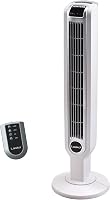
The Honeywell QuietSet HYF290B is a better shape for a bedroom with a narrow space beside a bed or dresser. It has 8 speed settings, oscillation and a remote that stores in the back of the housing.
Skip a tower fan if you need to aim airflow at a height the model doesn't offer or want a head that tilts manually. Check the controls and placement against the bed before choosing.
For more bedroom options, see our guide to best quiet tower fans for sleeping and reading. If you're comparing a tall narrow fan with a low floor model, our tower fan vs floor fan comparison explains the placement trade-offs.
What fan suits a large or open room?
A large or open room needs airflow that can travel along a clear path to where people gather. A circulator or a high-velocity floor fan can suit a longer reach, while a pedestal fan is useful when adjustable height and oscillation matter.
The Vornado 660 is a compact circulator with 4 speeds and a head that tilts up to 90 degrees. It is designed to move air up to 100 ft, which makes it a fit for a room where you can point airflow across open space.
Choose the Vornado when you want to direct air along a specific route instead of sweeping it side to side. Skip it if you need a tall fan that raises airflow above furniture, or prefer a tower shape that fits into a narrow corner.
The Lasko Wind Machine 3301 suits a garage, workshop or large room where a stronger low breeze is useful. Its 20-inch blade, 3 speeds and pivoting head let you direct airflow toward a hot spot or along a room.
Choose this Lasko when you want a strong breeze and plan to keep the fan far enough away that the airflow feels comfortable. Skip a high-velocity floor fan if you need a quiet bedside breeze or have little floor space.
For more options in open layouts, compare our picks for best fans for large rooms and open floor plans. If you're choosing a fan for a garage, see the guide to best shop fans for a hot garage.
How do the main room fan types differ?
Pedestal, tower, circulator and high-velocity floor fans differ in height, footprint and airflow direction. Choose based on where the breeze needs to go and how much space you can give the fan.
Pedestal and standing fans
A pedestal fan raises its head above the floor and can direct airflow toward a seated or sleeping person. Some models add height adjustment, remote controls and oscillation.
The DREO combines a pedestal fan with an air-circulation design. Its 120-degree horizontal oscillation spreads airflow side to side, and its vertical tilt adjusts manually up to 120 degrees.
This model suits a room where you want to adjust both height and horizontal airflow. The remote and LED display make it easier to change settings from across the room.
Its narrow base still needs a stable, clear spot on the floor. Measure that space and check the cord can reach an outlet without crossing a walkway.
Slim tower fans
A tower fan's upright shape can fit beside a sofa or desk where a wide base is awkward. Many models oscillate to move airflow across a wider area.
The Honeywell QuietSet HYF290B is a 40-inch tower fan with 8 speed settings. The remote stores at the back of the housing, making it easier to keep track of when the fan isn't in use.
Choose it when a narrow footprint matters and you want to change speed from across the room. Skip it if a low, manually tilting head would fit your airflow needs better.
A tower fan also makes sense when you want the controls and airflow in one tall unit that can stand beside furniture. Keep it clear of curtains and furniture so the air outlet isn't blocked.
Compare the shapes in our tower fan vs oscillating fan guide. For another model-focused comparison, read Dreo vs Lasko tower fan.
Air circulators
An air circulator is useful when you want air to travel across a room instead of staying close to the fan. A tilting head helps aim the airflow along an open route.
The Vornado 660 uses 4 speeds and a head that tilts up to 90 degrees. Its compact floor-standing shape can fit in a bedroom or office, and its 6-foot cord gives you some flexibility when choosing a spot near an outlet.
Choose it when you can point the airflow across the space. Skip it if you want a fan that oscillates side to side or need adjustable height above furniture.
For a circulator to work well, give its intake and outlet open space. Aiming it straight into a wall or hiding it behind a chair cuts off the path you want the air to take.
Read how to cool a room with a fan for ways to use a fan with the room's existing airflow.
High-velocity floor fans
A high-velocity floor fan sends a strong stream of air from a low position. That can be useful in a large room, garage or workshop where a direct breeze matters more than a small footprint.
The Lasko Wind Machine 3301 has a 20-inch blade, 3 speeds and a 360-degree pivoting head. Its carry handle helps you move it between rooms or work areas.
Choose it when you need a forceful breeze or want to direct airflow toward a warm area. Skip it for a bedside spot if you want gentle airflow, or if the fan would sit too close to people.
The low position affects where the air travels. Aim the fan toward the open part of the room rather than at a nearby chair, and keep its path clear.
Bladeless fans
A bladeless fan may suit you if you prefer that form factor or want to avoid exposed fan blades. Compare the individual model's footprint, airflow direction and controls before treating it as a better choice.
The category label alone doesn't tell you how much air a model moves or where it will fit. Decide where it will stand and what kind of breeze you need, then compare specific features.
How should you choose a fan for your room?
Choose a fan by room layout, airflow path, placement and controls. Room size helps narrow the options, but furniture and the distance to the people using the room can change how useful a fan feels.
What room size do you need to cool?
Start with the room's floor area and identify the spots where people spend time. Then check how open the route is between the fan and those spots.
A single fan may suit an open room but have trouble sending airflow around corners or through doorways. For an open floor plan, consider whether you need one fan to move air across a long stretch or several fans to serve separate areas.
The room fan sizing guide can help you think through area and layout. For a larger space, compare the options in our large-room fan guide.
Should you choose oscillation or fixed airflow?
Choose oscillation when you want a moving breeze to reach more than one spot. Choose fixed airflow when you want to aim a steady stream toward one area or along a path across the room.
Check how the fan changes direction. The DREO and Honeywell offer horizontal oscillation, while the Vornado and Lasko use tilt or pivot to aim airflow.
Consider whether you'll need to change the direction often. A remote can make adjustments easier from across the room, while a manually adjustable head requires you to reach the fan.
Which fan controls and features matter most?
Prioritize settings you will use regularly. A remote can help when the fan is across the room, and multiple speeds give you more choice between a gentle breeze and stronger airflow.
Before you buy, check whether you can answer these questions:
- Can you reach the controls from where you sit or sleep?
- Can you aim or spread airflow the way you want?
- Will the fan fit without blocking a door, walkway or outlet?
- Can you keep the intake and outlet clear?
- Can you clean the accessible parts when dust builds up?
More settings don't automatically make a fan a better fit. A simple control panel can be easier to use if you only need a few speeds and one direction.
How much floor space can you give the fan?
Measure the spot where the fan will stand, including room for air to enter and leave. Check its height if you'll place it near a desk, bed or low shelf.
A tower fan can use a narrow spot, but it still needs an open outlet for airflow. A pedestal fan's head stands higher, while its base needs space that won't interfere with a walkway.
A floor circulator or high-velocity fan may sit low and project airflow across the room. Give it enough clearance so furniture, bedding or curtains don't block the breeze.
Should the fan point at you or across the room?
Point a fan at people when the goal is a direct cooling breeze. Aim a circulator across an open area when you want to move air through the room or spread air from an air conditioner.
The right direction may change during the day as people move between a desk, sofa and bed. Place the fan where you can adjust it without moving furniture or creating a tripping hazard.
Our guide to fan direction for cooling a room explains how to choose which way the fan should face.
How do you set up a room fan for useful airflow?
Set up a fan on a stable surface with a clear path between the air outlet and the place you want to cool. Start with a low speed, then adjust direction and speed until the breeze feels comfortable.
Keep the fan away from curtains and other loose fabric that could block airflow. Don't place it where people must step over its cord or where the fan blocks a door or walkway.
For a tower or pedestal fan, check that the base sits flat and that the outlet points into open space. For a tilting circulator, aim it across the room if you want air to travel beyond the area right next to it.
If the fan is for a bedroom, try its position before settling in for the night. You want airflow to reach the bed without blowing too hard or crossing the path to the door.
A fan can also support air conditioning by moving conditioned air through the occupied part of a room. It won't replace air conditioning in hot conditions, and it won't lower the room temperature on its own.
What common room fan mistakes should you avoid?
The most common mistake is choosing a fan by shape or size alone. A fan only helps when its airflow reaches the people or areas you want to cool.
Avoid these setup and buying errors:
- Choosing a fan that won't fit: Measure the intended spot, including the path around the base and the outlet for airflow.
- Aiming air into a wall: Give the stream a clear route to people or across the room.
- Putting the fan too close: A strong floor fan can feel uncomfortable nearby; move it farther away or choose a lower speed.
- Expecting it to lower room temperature: A fan moves air over people, but doesn't chill the air itself.
- Ignoring the controls: A remote and multiple speeds help only if they match how you use the room.
- Blocking the intake or outlet: Furniture, bedding and curtains can interrupt airflow.
- Using one fan for disconnected spaces: Walls and doorways can break up the airflow path, so separate areas may need separate placement.
Don't assume a higher speed is always better. A lower setting aimed well can feel more comfortable than a strong breeze pointed at the wrong spot.
How do you care for a room fan?
Keep a fan's accessible surfaces and grille free of dust, and follow its instructions for cleaning. Unplug the fan before cleaning it, and don't put water on its motor or controls.
Dust can collect on the grille and reduce open space for air to pass through. Use a soft cloth or brush on parts you can reach safely, and avoid forcing tools through a grille.
Some fans are easier to clean than others. Check whether the grille or other parts can be accessed without taking the fan apart, and use only the cleaning method the manufacturer allows.
After cleaning, make sure the fan is dry before plugging it back in. If a fan makes a new noise, wobbles or has a damaged cord, stop using it until the issue is addressed.
For a fan-specific cleaning routine, see how to clean a tower fan without disassembly or how to clean a floor fan.
Which room fan should you choose?
Pick the DREO pedestal fan if you want adjustable height, oscillation, a remote and several speed choices for a bedroom or living area. Pick the Honeywell tower fan if floor space is tight and you want a slim unit with 8 speeds and a remote.
Choose the Vornado 660 if you can aim airflow across an open room and prefer a tilting circulator. Choose the Lasko Wind Machine 3301 if you need a stronger directed breeze for a garage, workshop or large room and can give a low floor fan space.
For the best room fans for cooling, decide where you need airflow to go first, then match the fan's shape and controls to that job. If you're still unsure, use the room fan sizing guide to narrow the choice by your room's layout.
Frequently asked questions
What type of fan is best for cooling a room?
The best type depends on the room and how you want air to move. A pedestal fan offers adjustable height and broad airflow, a tower fan fits narrow spaces, a circulator aims air across the room, and a high-velocity floor fan sends a stronger breeze in a chosen direction.
Are tower fans or pedestal fans better for bedrooms?
A tower fan can fit beside furniture where floor space is tight, while a pedestal fan lets you adjust height and direct airflow toward a bed. Compare the fan's controls, oscillation and placement with your room layout, then choose the type that sends air where you want it without blocking a walkway.
Do fans cool a room's temperature?
A fan moves air over people and can make them feel cooler, but it does not lower the room's temperature by itself. Use it to circulate conditioned air or create a breeze where you sit, and turn it off in an empty room if no one benefits from the airflow.
What size fan do I need for my room?
Start with the room's area and layout, then consider ceiling height, furniture and where you need airflow. A small fan may suit a desk or bedside spot, while open rooms often need airflow that can reach across a longer distance.
See our room fan sizing guide for more detail.
Where should you place a fan to cool a room?
Place the fan so its airflow reaches people or helps move air between parts of the room. Keep its intake and outlet clear of walls, curtains and furniture, and adjust the direction to suit the room.
Our guide to fan direction and placement explains how to choose which way it should face.