Fan Direction to Cool a Room: Which Way Should It Face?
For fan direction to cool a room, aim airflow at people for a cooling breeze. When outdoor air is cooler than indoor air, place a fan by an open window and point it outward to help move warm air outside.
On this page (8 sections)
- Which way should a fan face to cool a room?
- Should you point a fan at people or out a window?
- Should you point a fan up or down?
- How should a fan face in a bedroom?
- When should a fan point out the window?
- Does fan size or oscillation change where it should face?
- What common fan placement mistakes should you avoid?
- Which fan and direction should you choose?
For fan direction to cool a room, aim airflow at people when they want a cooling breeze. If outdoor air is cooler than indoor air, place the fan near an open window and point it outward to help move warm air out.
A fan moves air; it doesn't lower the room's air temperature by itself. Choose the direction based on whether you want to feel cooler in one spot or exchange warm indoor air for cooler outdoor air.
Which way should a fan face to cool a room?
Point the fan toward people for personal comfort, or toward an open window to move indoor air outside. First check the outdoor temperature, then decide whether ventilation will help.
When it's hotter outdoors, keep windows closed and direct airflow across the occupied part of the room. When outdoor air is cooler, open a window and use the fan to help move air through the space.
A clear path matters as much as direction. Sofas, desks, and curtains can interrupt the airflow.
Position the fan where air can reach people or travel toward the opening. For a guide to the main fan styles, see room fans for cooling.
Should you point a fan at people or out a window?
Aim it at people if you want to feel cooler; face it out a window when cooler outdoor air can replace warm indoor air. A fan's breeze helps sweat evaporate, which can make your skin feel cooler, but it doesn't chill the room.
For window ventilation, set the fan near the opening with its front facing outdoors. Open another window or door on the opposite side to give replacement air a route into the room.
If the outdoor air is hotter or feels less comfortable, close the window and aim the fan at the people using the room. Turn it off when the room is empty, since the breeze only helps people who are there to feel it.
How does fan direction to cool a room change with a cross-breeze?
For a cross-breeze, use openings on different sides of the room or home. Point a fan out through one opening and let air enter through another.
Try the opening on the warmer or stuffier side for the exhaust fan, while keeping the incoming path clear. If the breeze is weak, move the fan closer to the opening and check for obstructions between the two sides.
Should you point a fan up or down?
Aim airflow toward the occupied area and keep its path clear. For a portable fan, a breeze at sitting or standing height is a practical starting point.
If the fan tilts or adjusts in height, direct it around furniture rather than into a wall or the back of a sofa. The Vornado 683DC pedestal air circulator adjusts from 32 to 38 in, which helps position air at different heights.
This model suits someone who wants a freestanding fan with adjustable height and front controls. Skip it if you need a small bedside fan or want oscillation across a wider area.
Check what size fan you need for your room if you aren't sure how much space the fan needs.
How should a fan face in a bedroom?
Aim the fan toward the bed when you want a breeze while resting, and start at a comfortable speed. Keep the fan stable and leave space around it so its airflow isn't blocked.
The Vornado 560 Medium Air Circulator has a chrome glide bar for changing its angle and 4 speed settings. Its compact size suits a bedside, office, or dorm setup where you want to direct air toward one area.
Choose this model if you want a compact fan with a manually adjustable angle and several speeds. Skip it if you need a tall fan to reach over furniture or want automatic, wide-area oscillation.
For ways to combine a direct breeze with ventilation, see how to cool a room with a fan.
When should a fan point out the window?
Point a fan out when outdoor air is cooler than the air inside. It can help push warm indoor air outdoors, especially when another opening lets cooler air enter.
Place the fan securely and keep curtains, blinds, and loose items clear of it. Don't block the route from the second opening, or the fan may have little replacement air to draw through the room.
If it is hotter outside, window ventilation can bring in warmer air. Close the window and redirect the fan toward people instead.
Does fan size or oscillation change where it should face?
Size affects how much airflow a fan can provide, and oscillation spreads that airflow over a wider area. The basic choice remains the same: aim toward people for a breeze, or outdoors for ventilation when the outdoor air is cooler.
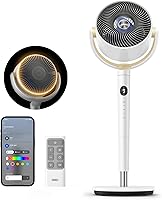
The DREO Smart Pedestal Fan can oscillate horizontally and vertically, each up to 120 degrees. It has 9 speeds, 6 modes, app and remote controls, and an adjustable pedestal.
This DREO fits buyers who want app or remote control and wide, two-axis movement. Skip it if you prefer simple manual controls or want a fan that stays aimed at one fixed spot.
For a direct fan comparison, read tower fan vs floor fan.
What common fan placement mistakes should you avoid?
Don't aim the fan at a wall, block its airflow with furniture, or exhaust air through a window when outside is hotter. These choices can leave people feeling little benefit or bring in less comfortable air.
Use this quick setup routine:
- Decide whether people need a breeze or the room needs ventilation.
- Compare indoor and outdoor conditions before opening a window.
- Aim the fan toward people, or out through a window if outdoor air is cooler.
- Leave a clear route between the fan and its target.
- Adjust the angle or speed if air misses the occupied area.
If the breeze doesn't reach you, move the fan closer or change its angle before turning up the speed. For window use, keep the fan stable and the incoming opening clear.
Which fan and direction should you choose?
Choose the direction first, then pick a fan that suits the placement. A fan can't make a room cooler on its own, so use ventilation when outdoor air helps and direct airflow at people when they need a breeze.
Pick the Vornado 560 for a compact, adjustable fan aimed at a bed or desk. Choose the Vornado 683DC if you need a pedestal fan whose height and speed can be adjusted, or the DREO if you want app or remote controls and broad two-way oscillation.
For fan direction to cool a room, point the fan at people when they need a breeze. Point it out a window when cooler outdoor air can replace warm indoor air.
Start with a clear airflow path, then adjust position or speed to suit the room. See our guide to cooling a room with a fan for more setup ideas.
Frequently asked questions
Should a fan face in or out of a window to cool a room?
Point it out when outdoor air is cooler and you want to push warm indoor air outside. For a cross-breeze, open another window or door on the opposite side so cooler air can enter.
If it is hotter outside, keep the window closed and aim the fan at people indoors.
Should a fan point at you to cool you down?
Yes, aim the fan at people when you want to feel cooler. Moving air helps sweat evaporate from skin, which can make you feel cooler, but it does not lower the room's air temperature.
Turn it off when no one is in the room.
Does reversing a fan direction cool a room?
For a portable fan, point its front toward the area where you want airflow to go. Most portable fans do not reverse direction like some ceiling fans.
For window ventilation, turn the whole fan so it blows outdoors when the outside air is cooler.
Where should you place a fan to cool a room?
Place it where the airflow can reach people without hitting furniture or a wall first. For ventilation, set it near an open window and point it out when outdoor air is cooler, with another opening elsewhere for incoming air.
Keep it stable and clear of curtains.