DC Fan vs AC Fan: Which Motor Is Worth It? (October 2026)
A DC fan is worth considering for fine speed control; an AC fan may suit you if simple controls matter more. Compare exact fan features and power figures, since motor type alone doesn't show how much electricity a fan uses.
On this page (7 sections)
A DC fan can be worth it for fine speed control; an AC fan may suit you if straightforward controls matter more. In a DC fan vs AC fan comparison, look at the exact model's features and energy figures, not just its motor label.
DC motors can support a wider range of speeds, while many AC fans use a few preset settings. That difference can affect how closely you can tune the breeze, but motor type alone doesn't show a fan's airflow or electricity use.
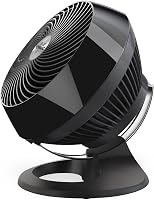
For a quick example, the Vornado 533DC has a brushless DC motor and variable speed control. The Vornado 530 has 3 manual speeds, but its motor type isn't specified, so it can't serve as a confirmed AC comparison.


DC fan vs AC fan: what changes?
DC fans use direct current, while AC fans use alternating current; the motor and its controls can affect speed options. The exact design matters, so check model details before drawing conclusions.
Some fans convert incoming AC power for a DC motor. That conversion and the motor's design can affect how much electricity the fan uses, but a general label doesn't provide a reliable consumption figure for a particular model.
A DC fan may offer more speed steps or smoother adjustment. For example, the Vornado 533DC provides variable speed control, while the DREO 100ft Airflow DC Pedestal Fan has 9 wind speeds.
AC fans commonly use simple preset controls. A fan with 3 speeds may be enough if you only switch between low, medium and high airflow.
Does the motor type tell you how much power a fan uses?
No, you need the power figure for the exact fan and the setting you plan to use. Speed, run time and fan design all affect electricity use.
A fan running at its highest setting may use more power than the same fan on low. Two fans with different motor types can also have different power needs.
If energy use is your main concern, compare wattage or annual energy figures when they're available. Our guide to how much electricity a tower fan uses explains how to estimate running cost from a fan's power draw and your use time.
Which motor type gives you better speed control?
DC fans often provide more speed choices, while some AC fans keep adjustment simple with a few preset speeds. Compare the controls you will use rather than assuming every DC or AC fan follows the same pattern.
The Vornado 533DC's variable speed control lets you adjust airflow. That can help if one preset feels too strong and the next feels too weak.
The Vornado 530 uses 3 manual speeds. It offers fewer choices, but its dial keeps adjustments direct.
The DREO 100ft Airflow DC Pedestal Fan provides 9 wind speeds and a remote. Its horizontal oscillation can be controlled by remote or panel, while vertical tilt is manual.
If you want to compare room formats before choosing a motor, start with our guide to room fans for cooling. It covers common fan types and where each can fit.
Which fan fits your room and routine?
Choose based on where the fan will sit, where you want air to go and how often you change its settings. Motor type is only one part of that choice.
When is a DC fan worth choosing?
A DC fan may fit your routine if you adjust airflow often or want more control over speed. The 533DC's variable speed control and adjustable tilt head suit targeted airflow from a tabletop position.
For a standing option, the DREO 100ft Airflow DC Pedestal Fan has 9 speeds, remote control and horizontal oscillation. Its height adjusts from 37 to 42 in.
A low-speed setting may suit a bedroom or workspace where you want gentler airflow. DREO describes this fan as quiet at low speeds, though sound can depend on the room and setting.
When might an AC fan be the better fit?
An AC fan may make sense if a few clear speed settings are all you need. Simple controls can be easier to use when you rarely adjust the fan during the day.
Check the exact model before buying. The Vornado 530's 3-speed control is easy to compare with the variable controls on the DC models here, but its motor type isn't specified.
For room size and airflow placement, see what size fan you need for your room. A fan that fits your space and routine is a better match than one chosen by motor label alone.
Is a DC fan quieter?
A DC motor doesn't guarantee that a fan will be quiet. Sound depends on the fan's design and speed, so look for model-specific information and consider which setting you'll use.
DREO describes the DREO 100ft Airflow DC Pedestal Fan as quiet at low speeds. Its 9 wind speeds let you choose among several airflow levels, but this doesn't tell you how loud it will sound in your room.
Blade shape, grille design and airflow can affect the sound you hear. If quiet operation matters, look for noise information for the exact model and use a lower setting when it still moves enough air for your needs.
How should you compare DC fan vs AC fan power consumption?
Compare published power figures for the exact models at similar settings, then factor in your daily run time. This is the most useful way to assess DC fan vs AC fan power consumption.
A simple estimate is:
watts ÷ 1,000 × hours used = kilowatt-hours
For example, a 40-watt fan running for 5 hours uses 0.2 kWh for that period. This is a calculation example, not a figure for any fan discussed here.
Multiply the kWh by your electricity rate to estimate the energy charge. The result won't include other charges on your bill, and actual power use can vary by speed and conditions.
The product data don't give comparable wattage figures for the 3 fans. That means you can't rank their electricity use from these details alone, even though 2 are identified as DC models.
Which of these fans matches the difference?
The DREO 100ft Airflow DC Pedestal Fan offers 9 speeds with oscillation, the Vornado 533DC offers variable control, and the Vornado 530 gives you 3 manual speeds. Choose by the control range and placement you want.
The Vornado 533DC suits a desk, tabletop or small room where adjustable direction and fine speed changes matter. The Vornado 530 is a straightforward compact option, though its motor type isn't specified.
The DREO 100ft Airflow DC Pedestal Fan is a height-adjustable pedestal fan. Its oscillation and remote make it useful when you want to move air across more of the room.
How do you choose between AC and DC?
Pick a DC fan if you value more speed control; pick an AC fan if a simpler control range meets your needs. Compare power figures for the exact models before choosing based on electricity use.
For a tabletop fan with variable speed, consider the Vornado 533DC Small Air Circulator. For 3 manual speeds, the Vornado 530 Compact Air Circulator offers a simpler control range, but verify motor type if that distinction is essential to you.
For a pedestal format with multiple speeds and oscillation, consider the DREO 100ft Airflow DC Pedestal Fan. To plan the rest of your cooling setup, see how to cool a room with a fan.
Frequently asked questions
Are AC or DC fans better?
Neither motor type is always better. DC fans often offer more speed choices, but compare the exact fan's controls, airflow and published power figures.
An AC fan can suit you if its simpler controls fit your needs.
Do DC fans use less electricity than AC fans?
A DC motor can be more efficient, but actual electricity use depends on the fan, its speed and how long you run it. Compare wattage or annual energy figures for the exact models at settings you expect to use.
Don't treat motor type alone as an energy estimate.
Can you tell whether a fan has an AC motor from its controls?
No. A fan with a few speed settings isn't automatically an AC model, and a fan with many settings isn't automatically DC.
Check the exact model's specifications for its motor type.
If the type isn't given, compare the controls and other known details instead.
Is a DC fan worth the extra cost?
It can be worth it if you value fine speed control or lower energy use over time. First compare the exact model's price and power information, since those details vary.
If you rarely change settings, a basic fan may cover your needs.