Are Tower Fans Better Than Regular Fans?
Tower fans are better when you want a slim footprint and airflow spread across a room. Regular pedestal and floor fans can be a better fit when you want adjustable airflow direction or more direct airflow.
On this page (10 sections)
- Are tower fans better than regular fans?
- What is the difference between a tower fan and a regular fan?
- Do tower fans cool a room better than pedestal fans?
- When should you choose a tower fan?
- When is a regular fan the better choice?
- Which fan is easier to clean?
- Are tower fans quieter than regular fans?
- Are tower fans more energy efficient than regular fans?
- Which fan should you choose for your room?
- Are tower fans better than regular fans for you?
Tower fans are a good fit when you want a slim footprint and airflow spread across a room. Regular pedestal and floor fans can suit you better when you want adjustable airflow direction or more direct airflow.
The right choice depends on where you’ll use the fan and how you want the air to feel. A tower fan’s narrow body can fit beside furniture, while a pedestal fan’s head can tilt to direct air at a particular height or spot.
Are tower fans better than regular fans?
Tower fans suit narrow spaces and broad, sweeping airflow. Regular fans can be better for directing air toward one place or moving air across an open area.
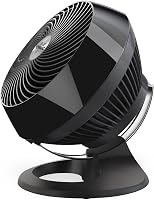
“Regular fan” can mean a pedestal fan, a box fan, or a floor fan. Their shapes and airflow differ, so compare the type you have in mind rather than treating all regular fans as the same.
Many tower fans oscillate to spread airflow from side to side. Some pedestal fans do too, and some let you tilt the head to aim airflow up or down.
For a broader look at options for different rooms, see our guide to room fans for cooling.
What is the difference between a tower fan and a regular fan?
A tower fan moves air through a tall, narrow housing, while many regular fans use exposed blades in a round head. That affects how each fan fits, aims, and gets cleaned.
| Feature | Tower fan | Regular pedestal or floor fan |
|---|---|---|
| Shape | Tall, slim body | Round head or broad frame |
| Placement | Can fit beside furniture or in a narrow corner | Often needs more open floor space |
| Airflow direction | Usually spreads airflow through oscillation | Some heads tilt to aim air up or down |
| Airflow feel | Broad, sweeping breeze | More direct airflow from the fan head |
| Cleaning | Internal parts may be harder to reach | Blade and grille access varies by model |
These are common differences, not rules for every model. Check the design, controls, cleaning instructions, and airflow features of the fan you’re considering.
Do tower fans cool a room better than pedestal fans?
Neither shape lowers room temperature; both move air to help you feel cooler. A pedestal fan may suit you better when you want direct airflow, while a tower fan can spread a breeze across more of the room.
A fan doesn’t lower the room’s air temperature like an air conditioner. It moves air over your skin, which can help your body lose heat.
Room layout matters. A fan aimed across your seating area may feel more useful than one pointed away from you.
If you’re choosing a fan for a larger area, see our guide to fans for large rooms and open floor plans. For advice on placement and airflow, read how to cool a room with a fan.
When should you choose a tower fan?
Choose a tower fan if you want a narrow fan body, side-to-side oscillation, or controls you can reach from a bed or couch. Its shape can be useful in a bedroom, office, or living room where floor space is limited.
The Lasko 2510 has three speeds, 60-degree oscillation, a remote, and a timer you can set for up to 7 hours. It is 36 in tall and has a slim, space-saving design.
A tower fan may be less suitable if you want to aim airflow vertically or clean exposed blades directly. Check the fan’s cleaning instructions before buying, especially if dust buildup is a concern.
The DREO Smart Tower Fan has 8 speeds, 4 modes, 90-degree oscillation, app and voice control, and an 8-hour timer. DREO gives its airflow speed as up to 28 ft/s.
For more details on cleaning, see how to clean a tower fan without taking it apart. If oscillation is a priority, compare the best oscillating tower fans.
When is a regular fan the better choice?
Choose a pedestal or floor fan if you want to aim its head at a specific spot or adjust the airflow height. The DREO standing fan has a pivoting head and adjustable height.
Some pedestal fans oscillate and direct air toward a bed, chair, or work area. A floor fan may suit you if you want low, direct airflow across a room or workspace.
The DREO Standing Oscillating Fan has 90-degree horizontal oscillation, a 105-degree pivoting head, and an adjustable height range of 38 to 42 in. It also has 8 speeds and an auto mode that adjusts fan speed as room temperature changes.
A regular fan can take up more space than a tower fan, and some models may be harder to move or position around furniture. Measure the floor area and check the fan’s head movement before you buy.
Which fan is easier to clean?
Cleaning access depends on the model. The DREO tower fan has a removable rear grille and impeller wheel, and the standing DREO model has detachable blades and front and rear grilles.
Dust can gather on grilles, blades, and internal fan parts. Follow the manufacturer’s cleaning instructions, unplug the fan before cleaning, and don’t force open parts that aren’t meant to come off.
A fan that is easy to clean may be more practical if you plan to use it daily. For a tower fan, see our guide to cleaning a tower fan without taking it apart.
Are tower fans quieter than regular fans?
A tower fan is not automatically quieter than a regular fan. Noise depends on the motor, speed, and design, so compare the settings and sound information for the specific model.
A lower speed may be more comfortable when you’re sleeping or working nearby. Timer and sleep settings can help you control how long a fan runs, but they don’t guarantee quiet operation.
The Lasko 2510 has three speeds described as whisper-quiet by Lasko, plus a remote and a timer. The DREO Smart Tower Fan includes Sleep Mode and an 8-hour timer.
If low noise is a priority, compare the options in our guide to quiet tower fans for sleeping and reading. Consider whether the fan’s airflow settings give you a comfortable breeze at a sound level you can tolerate.
Are tower fans more energy efficient than regular fans?
A fan’s motor and power draw matter more than its shape. A tower fan is not necessarily more energy efficient simply because it has a slim design.
Compare the electrical power information for the exact models you’re considering. If you’re unsure how a fan’s use adds up, see how much electricity a tower fan uses.
Running a fan only when you’re in the room can help avoid using electricity when you don’t need airflow. A timer may help set a run time, but it doesn’t tell you how much power the fan uses.
Which fan should you choose for your room?
Choose based on the space and airflow you need. A tower fan suits a narrow floor area and a sweeping breeze, while a pedestal or floor fan suits targeted airflow and an adjustable head.
- Choose a tower fan for a slim shape and side-to-side airflow.
- Choose a pedestal fan if you want to adjust its height and aim its head.
- Choose a floor fan if you want direct airflow at a lower level.
- Compare noise, cleaning access, and controls for the exact model.
Measure the available space and consider where you’ll sit or sleep. If you still need help matching a fan to your room, read what size fan you need for your room.
Are tower fans better than regular fans for you?
Pick a tower fan if space is tight and you want airflow to sweep across the room. Pick a pedestal or floor fan if adjustable aim and direct airflow matter more.
The right fan depends on how you’ll use it, where you can place it, and how much control you want over airflow direction. Start with those needs, then compare the fan’s speeds, controls, cleaning access, and timer.