Tower Fan vs Oscillating Fan: How They Differ (October 2026)
Choose a tower fan for a slim shape and an oscillating standing fan for adjustable height and aim. The right fit depends on where you want the breeze to go and how much floor space you have.
On this page (6 sections)
Choose a tower fan for a slim shape and an oscillating standing fan for adjustable height and aim. In a tower fan vs oscillating fan comparison, “tower” describes shape, while “oscillating” describes movement.
Many tower fans oscillate, so these aren't always separate types. Compare each model's footprint, movement range, height and controls to see how its breeze will fit your room.
For a broader overview of room fan types and what each does, start with the space you need to cool and how you want air to move.


Tower fan vs oscillating fan: what's the difference?
A tower fan is tall and narrow; an oscillating fan sweeps its airflow from side to side. A fan can be both tower-shaped and oscillating.
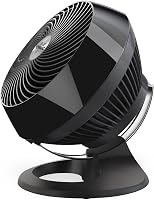
A tower's vertical body places its outlet above the floor in a slim frame. A pedestal or standing fan has a separate head on a stand, and the head may pivot or oscillate.
Oscillation changes where the breeze goes over time. It doesn't mean a fan cools the air or lowers the room temperature.
Check the actual design and movement features before buying. The guide to how oscillating fans work explains the sweep and what it does.
Does every tower fan oscillate?
No, so check the model's movement range. The DREO tower oscillates through 90°, while the Lasko 2510 has a 60° range.
Some models may have no oscillation, or may let you turn it off. A fixed fan can work well when you want air aimed at one seat, but it won't sweep a breeze across several spots.
Which type fits a small room?
A tower fan often fits a narrow floor area more easily, while a standing fan needs room for its base and moving head. Measure the placement area and leave enough space for airflow.
The Lasko 2510 is 36 in tall and measures 12 in across and deep. The DREO tower is 41.89 in tall and measures about 12.72 in across and deep.
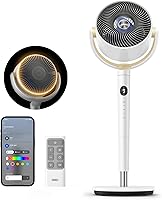
The DREO standing fan adjusts from 38 to 42 in high. Its head pivots, so account for the space its movement needs as well as the base.
These measurements describe the fan bodies, not the full clear space around them. Keep the inlet and outlet paths open, and avoid placing a fan where a door or walkway can hit it.
If you're unsure whether a fan will suit your room, use the room fan sizing guide to think through the space and airflow needs.
Which fan gives you more control over airflow?
A standing fan with a pivoting head gives you more options for directing airflow at different heights. A tower fan can still spread a breeze across a room through oscillation.
The DREO standing fan combines 90° horizontal oscillation with a 105° pivoting head and adjustable height. You can set the height between 38 and 42 in.
The DREO tower has 9 speeds, 4 modes and 90° oscillation. DREO gives its airflow reach as up to 36 ft, though reach alone doesn't show how evenly air will move through your particular room.
The Lasko tower has 3 speeds, 60° oscillation and a remote that operates speed, oscillation and timer. Choose it if those basics are enough for your routine.
For other ways to position a fan, see how to cool a room with a fan. Room layout and where you sit matter as much as the fan's shape.
Which is easier to clean and maintain?
Choose based on how easily you can reach the parts that collect dust. Fan shape alone doesn't tell you how much disassembly cleaning requires.
The DREO tower has a removable rear grille that can be vacuumed or rinsed. The DREO standing fan has detachable blade, front grille and rear grille parts.
The Lasko's features don't specify a removable grille. Check its care instructions before buying if you need to reach the blades or interior.
Dust buildup can restrict airflow, so follow the model's cleaning instructions. For a tower fan, use this guide to clean it without taking it apart.
Which fan should you choose for your room?
Pick a tower fan if a slim shape and simple placement matter most; pick an adjustable oscillating standing fan if you want to change the breeze's height and direction. Then narrow the choice by controls, cleaning access and movement range.
A tower fan can fit beside a desk, bed or sofa where a pedestal base would get in the way. The DREO tower offers more speeds and a wider sweep than the Lasko 2510.
An adjustable standing fan can suit a room where airflow needs to reach different levels or you want to pivot the head. Its base and head need more open space around them.
If the choice is really between a tower fan and another floor fan style, compare tower and floor fan trade-offs before deciding. For more tower options, see the best oscillating tower fans.
Is a tower fan or oscillating fan better?
Choose by shape and aim: a tower fan suits tight floor space, while an adjustable standing fan suits changing airflow height and direction. If you're choosing a tower, compare its speeds, sweep and cleaning access; if you're choosing a standing fan, make room for its base and pivoting head.
Frequently asked questions
Is a tower fan an oscillating fan?
Many tower fans oscillate, but the terms describe different things. Tower fan refers to the fan's tall, narrow shape, while oscillating describes a side-to-side movement that sweeps airflow across an area.
Check the exact model for its oscillation range and whether the feature can be turned off.
Which fan is better for a bedroom?
A tower fan can suit a bedroom where floor space is tight, while an adjustable standing oscillating fan can aim air at different heights. Compare controls, timer length, sound details and cleaning access for the exact model, then place it where the moving breeze won't bother you.
Does an oscillating fan cool a whole room?
Oscillation moves a fan's breeze across a wider area, but it doesn't lower the room's temperature by itself. Room shape, obstacles, fan position and airflow all affect what you feel.
For room-wide air movement, look for a model designed to circulate air and check its stated reach.
Which type is easier to clean?
Cleaning depends on the fan's grille and whether parts come apart, not only on tower or pedestal shape. Some tower fans have removable grilles, while some standing fans let you detach the blade and grilles.
Check the care instructions and access points before choosing.