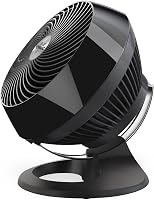
8 Best Standing Fans for Living Rooms (October 2026)
The best standing fans for living rooms include the DREO Smart Pedestal Fan for app-controlled rooms, the DREO 100ft Airflow DC Pedestal Fan for broad seating areas, and the DREO Standing Oscillating Fan with Remote for remote-first homes.
On this page (6 sections)
- Which standing fan is best for a living room?
- Best standing fans for living rooms by use
- How do you choose a standing fan for your living room?
- How should you set up and care for a living-room fan?
- Is a standing fan or floor fan better for a living room?
- Which standing fan should you choose for your living room?
The DREO Smart Pedestal Fan, 120 by 120 Degrees, is the best standing fan for many living rooms when you want app controls and airflow that sweeps both horizontally and vertically. Rowenta suits seating that needs a taller fan, while the Lasko Cyclone keeps speed and timer controls simple.
A living-room fan should match the seats you use, the path between the fan and those seats, and the amount of floor space you can spare. A broad sweep helps cover a sofa and nearby chairs; a fixed aim can be better when one reading chair is the priority.
Start with the room rather than the feature list. Measure the distance from the likely fan position to your seating, note any tables or furniture that could block airflow, and decide whether you want air moving across the room or directly at people.
If you're deciding between a pedestal fan and another shape, our plain guide to room fans for cooling explains where each type fits. For an open plan, compare the seating arrangement with our guide to fans for large rooms and open floor plans.
Our picks at a glance
-
1
 Best for app-controlled rooms
DREO Smart Pedestal Fan, 120 by 120 Degrees
9.1/10 our score
See it on Amazon -
2

-
3
 Best for remote-first homes
DREO Standing Oscillating Fan with Remote
8.4/10 our score
See it on Amazon
- 4
 Check it
Rowenta VU5550 Turbo Silence Standing Fan
Best for tall seating - 5
 Check it
Levoit 2-in-1 Pedestal and Tabletop Fan
Best for flexible placement - 6
 Check it
Vornado 683DC Pedestal Air Circulator
Best for dialed-in airflow - 7
 Check it
Lasko Whirlwind Orbital DC Pedestal Fan
Best for changing layouts - 8
 Check it
Lasko Cyclone Pedestal Fan with Remote
Best for simple timer control
Which standing fan is best for a living room?
The DREO Smart Pedestal Fan is a strong fit for a living room where air needs to reach more than one seat and you want to adjust it from a phone, voice command or remote. Choose a different model if you want a taller stand, a simple manual control or a fan you can move between floor and table placement.
We compared the controls, height range, oscillation and airflow details that affect placement around living-room seating. The scores reflect how each set of features fits the needs of this roundup.
| Product | Best for | Airflow | Height | Controls | Our score |
|---|---|---|---|---|---|
| DREO Smart Pedestal Fan, 120 by 120 Degrees | app-controlled rooms | 1000 CFM | 35.04 in | App, voice, remote and touch | 9.1 |
| DREO 100ft Airflow DC Pedestal Fan | broad seating areas | 1150 CFM | 37–42 in | Remote and panel | 8.9 |
| DREO Standing Oscillating Fan with Remote | remote-first homes | 1000 CFM | 38–42 in | Remote and touch | 8.4 |
| Rowenta VU5550 Turbo Silence Standing Fan | tall seating | Up to 2436 CFM | 42–54 in | Remote and manual dial | 8.2 |
| Levoit 2-in-1 Pedestal and Tabletop Fan | flexible placement | 1024 CFM | 38.2 in | Panel and remote | 8.0 |
| Vornado 683DC Pedestal Air Circulator | dialed-in airflow | 32–38 in | Front button control | 8.0 | |
| Lasko Whirlwind Orbital DC Pedestal Fan | changing layouts | 628 CFM | 21, 30 or 39 in | Remote and buttons | 7.6 |
| Lasko Cyclone Pedestal Fan with Remote | simple timer control | 1970 CFM | 41–53.5 in | Remote | 7.2 |
Best standing fans for living rooms by use
The best pick depends on whether you need wide coverage, direct aiming, a quiet low setting or controls you can reach from the sofa. The following fans are ordered by score, with a clear use case and trade-off for each.
DREO Smart Pedestal Fan, 120 by 120 Degrees: Best for app-controlled rooms
- App, voice, remote and touch controls
- 9 speeds and 6 modes
- Horizontal and vertical oscillation
App, voice and remote controls pair with 9 speeds and 6 modes for flexible living-room use. Horizontal and vertical oscillation can work together to spread airflow around the room.
Pros
- App and voice controls
- Two-axis oscillation
- Auto mode adjusts speed with temperature changes
Cons
- The stated circulation area is up to 105 sq ft
- App and voice controls may be more than a simple setup needs
The DREO Smart Pedestal Fan suits a living room where the breeze should move around more than one seat. Its head can oscillate horizontally and vertically together, with each axis moving up to 120°.
You can control it through the DREO app, voice commands, touch controls or the included remote. It offers 9 speeds and 6 modes, including Auto Mode, which adjusts speed as temperature changes.
DREO states a 1000 CFM airflow capacity and describes circulation for spaces up to 105 sq ft. That makes the stated coverage a useful point of comparison for an enclosed living room; for a larger open-plan space, check whether the fan's position has a clear path to the seats.
Choose this model if you want several control options and sweeping motion without manually redirecting the head. Skip it if you want a basic fan with a single control method or if the room is much larger than its stated circulation area.
DREO 100ft Airflow DC Pedestal Fan: Best for broad seating areas
- 9 speeds and 4 modes
- 120° horizontal oscillation
- 37–42 in adjustable height
Its 120° horizontal oscillation covers a broad sweep, while the 37–42 in adjustable height helps position airflow near sofas and chairs. A remote and large LED display make changes convenient from across the room.
Pros
- Wide horizontal oscillation
- Adjustable height
- 9 speeds and 4 modes
Cons
- Vertical tilt is adjusted by hand
- The stated airflow reach is up to 100 ft
The DREO 100ft Airflow DC Pedestal Fan works well for a broad seating area where you want airflow to sweep across the room. It has 120° horizontal oscillation and a 120° vertical tilt, with the vertical adjustment made by hand.
Its height adjusts from 37 to 42 in, so you can position airflow around chairs, a sofa or a desk. A remote and large LED display make changes convenient from across the room, and 9 speeds and 4 modes give you a wide choice of settings.
DREO states airflow at 1150 CFM and reach up to 100 ft. Those figures are useful for comparing the model with other fans, but your results will depend on where the fan sits and whether furniture blocks the airflow.
Choose this fan when wide movement and several speed choices matter. Skip it if you need app or voice controls, or if you don't want to adjust vertical tilt by hand.
DREO Standing Oscillating Fan with Remote: Best for remote-first homes
- 90° horizontal oscillation
- 105° pivoting head
- 38–42 in adjustable height
A remote, 8 speeds and 90° horizontal oscillation cover everyday adjustments without requiring app controls. The head also pivots 105° to help aim airflow toward a living-room seating spot.
Pros
- Remote can mute beep sounds
- Height adjusts from 38 to 42 in
- Detachable parts support cleaning
Cons
- No app control
- The 8-hour timer is shorter than some options here
This DREO standing fan suits buyers who want a remote and straightforward aiming options without app features. It oscillates horizontally through 90°, and its head can pivot through 105° to direct air toward a favored seat.
The height adjusts from 38 to 42 in. Its remote and touch controls operate 8 speeds and Auto Mode; the remote can also mute beep sounds.
For care, the blade, front grille and rear grille detach for cleaning. The built-in aroma pad is optional, but it won't replace cleaning the fan or remove the need to place it where air can reach the seating area.
DREO states 1000 CFM airflow capacity and reach up to 90 ft. Choose it for remote operation and adjustable height.
Its head can be aimed toward a seating spot. Skip it if you want app controls or a wider horizontal sweep than 90°.
Rowenta VU5550 Turbo Silence Standing Fan: Best for tall seating
- 42–54 in adjustable height
- 16 in oscillating head
- Remote and manual dial
The 42–54 in height range provides the tallest adjustment span among these picks. Its head can oscillate or stay stationary for more direct airflow.
Pros
- Tall adjustable stand
- Stationary or oscillating head
- Remote included
Cons
- 4 speeds offer fewer steps than several DC picks
- Its stated noise range is 40–57 dB
Rowenta suits living rooms where airflow needs to come from above the height of nearby furniture or seating. Its stand adjusts from 42 to 54 in, the tallest maximum height among these picks.
The 16 in head can oscillate, stay stationary or pivot up to 90° in all directions. A remote and manual dial operate its 4 speeds, so you can use the remote from the sofa or reach for the dial when standing nearby.
Rowenta states airflow up to 2436 CFM and a noise range of 40 to 57 dB. Choose the fan if its extra height and targeted aiming solve a placement problem; skip it if you want a low-noise setting for quiet reading or more fine-grained speed steps.
At 54 in tall and 18 in deep and wide, it needs a clear patch of floor. Measure the intended spot and keep the head clear of shelves, curtains and busy walkways.
Levoit 2-in-1 Pedestal and Tabletop Fan: Best for flexible placement
- Converts between pedestal and tabletop use
- 90° horizontal oscillation
- 5 speeds and Turbo mode
The 2-in-1 design can switch between pedestal and tabletop use, which helps when the fan needs to serve different spots. Its detachable grille and blades also make cleaning more direct.
Pros
- Two placement styles
- Detachable grille and blades
- Remote included
Cons
- 5 speeds provide fewer choices than the DREO models
- Its stated 20 dB noise level applies to the lowest setting
Levoit's 2-in-1 design is useful if the fan needs to serve different spots at different times. It can switch between pedestal and tabletop use, so you can place it near a sofa at full height or move it to a table when that arrangement works better.
It has 5 speeds and Turbo mode, with controls on the fan and an included remote. The head oscillates 90° horizontally and adjusts vertically by hand, which helps you direct airflow across the room or upward.
Levoit states airflow up to 1024 CFM and noise as low as 20 dB on the lowest setting. Its front grille and blades detach, making it easier to reach those parts for cleaning.
Choose it when flexible placement and low-speed quiet are priorities. Skip it if you need a large number of speed choices or a fan that stays at one fixed pedestal height; compare the height and conversion setup with your available surfaces before choosing a spot.
Vornado 683DC Pedestal Air Circulator: Best for dialed-in airflow
- Variable speed control
- 32–38 in adjustable height
- Air circulation stated up to 80 ft
A front-mounted variable speed control gives fine adjustment without cycling through a short list of fixed speeds. The height adjusts from 32 to 38 in for lower placement near seating.
Pros
- Variable speed control
- Adjustable height
- Brushless DC motor
Cons
- No remote is included
- Vornado says its circulation moves air up to 80 ft
The Vornado 683DC fits buyers who want to set airflow between fixed speed steps. Its front-mounted variable speed control is useful when the fan will sit near a chair or sofa and you can reach the control easily.
The stand adjusts from 32 to 38 in, making it one of the lower options here. Vornado describes its vortex circulation as moving air up to 80 ft and says its brushless DC motor uses up to 80% less energy than traditional AC fans.
There is no remote included, so plan to operate it at the fan. Choose the Vornado for variable speed and lower placement.
Skip it if you expect to adjust settings often from the sofa or want a taller stand.
Lasko Whirlwind Orbital DC Pedestal Fan: Best for changing layouts
- 3 adjustable heights: 21, 30 or 39 in
- 60°, 100° or 150° horizontal oscillation
- 105° vertical oscillation
Three height settings and several horizontal oscillation angles make this a flexible fit for changing seating layouts. It has 24 speeds, four modes and a 24-hour timer.
Pros
- Three height settings
- Customizable horizontal and vertical motion
- 24 speeds and four modes
Cons
- 628 CFM is the lowest stated airflow capacity here
- Height choices are fixed rather than continuously adjustable
The Lasko Whirlwind suits living rooms where the fan needs to change height or sweep as the seating arrangement changes. Choose among three set heights, 21, 30 or 39 in, and horizontal oscillation at 60°, 100° or 150°.
It also offers 105° vertical oscillation. The remote controls 24 speeds and 4 modes, and the timer can be set for up to 24 hours.
Lasko states airflow of 628 CFM and noise as low as 25 dBA on low speed. Its three height choices are fixed rather than continuously adjustable, so measure your seating height and intended fan location before buying.
Choose it if you value flexible motion, a long timer and multiple height settings. Skip it if you need a continuously adjustable stand or want the highest stated airflow capacity in this group.
Lasko Cyclone Pedestal Fan with Remote: Best for simple timer control
- 3 speeds
- 90° oscillation
- 41–53.5 in adjustable height
The Cyclone offers a taller adjustable stand, 90° oscillation and a remote that handles speed and timer changes. Its three speeds keep operation simple.
Pros
- Remote controls speed and timer
- Adjustable height
- 90° oscillation
Cons
- Only 3 speeds
- Its 4-hour auto-off timer is shorter than some options
The Lasko Cyclone is for a living room where you want a taller adjustable fan with a remote and simple controls. Its height adjusts from 41 to 53.5 in, and the head tilts back to direct airflow toward a seating area.
The fan offers 90° oscillation, 3 speeds and a 4-hour auto-off timer. The remote controls speed and timer settings, so you can make adjustments without leaving the sofa.
Lasko states airflow capacity of 1970 CFM. The base measures 20.2 in across and deep, so leave enough floor space for it and a clear path around the stand.
Choose it if a tall pedestal and easy remote timer fit your routine. Skip it if you want a quiet low-speed specification, a longer timer or a large range of speed steps.
How do you choose a standing fan for your living room?
Choose a standing fan by matching its height, movement, controls and footprint to your seating and room layout. The fan should aim air where you spend time, and its controls should suit how you plan to use it.
What height should a standing fan have near a sofa?
A standing fan should aim airflow toward seated people without furniture blocking the path. Compare the fan's usable height with the seat, nearby tables and the spot where its base can stand.
For a lower position, the Vornado adjusts from 32 to 38 in. Rowenta and the Lasko Cyclone provide taller adjustment ranges.
The Lasko Whirlwind offers three fixed heights. Check the entire range, not just the maximum, because the minimum height may be the one that fits your room.
If you want to move air across the room rather than aim it at a single seat, a lower fan may still work well when it has a clear path. For help matching airflow to room dimensions, see what size fan you need for your room.
Does oscillation help cool a living room?
Oscillation helps spread airflow across several seats, while a stationary or pivoting head can focus it on one place. Pick the motion that matches how people use the room instead of assuming the widest angle is always best.
Horizontal movement sweeps from side to side. Vertical movement can shift airflow up or down, and two-axis motion can distribute air across a broader area; however, it may be more movement than needed if one chair is the only target.
Think about whether people sit in a row, around a corner or in separate parts of the room. A wide sweep can suit several seats, while a fixed direction can be more comfortable if the fan would otherwise blow directly at someone for too long.
Do you need a remote or app for a living-room fan?
A remote is practical when the fan sits across the room from the sofa. App and voice options make sense if you already use them, but they add little value if you only need a button or dial.
The DREO Smart Pedestal Fan offers app, voice, touch and remote controls. The Vornado 683DC uses a front-mounted control, so it is a better fit when you can reach the fan and prefer direct adjustment.
Consider who will operate the fan, too. A short set of clear controls can be easier for guests or family members, while a timer can be useful if you want the fan to switch off after you leave the room or go to bed.
How much room does a pedestal fan need?
A pedestal fan needs floor space for its base, clearance for its moving head and an unobstructed path to the seats. Measure the footprint and check that the fan will not sit in a walkway or crowd a side table.
The Lasko Cyclone has a broad 20.2 in base, while several DREO models have a narrower footprint around 11 to 13 in across. Keep the head away from curtains and objects that could limit its movement.
For an open-plan room, decide whether one fan can serve the part of the room where people gather. See our guide to fans for large rooms and open floor plans if the space has multiple seating zones.
How should you set up and care for a living-room fan?
Set up a standing fan on a level, stable patch of floor with a clear path to the seats. Follow the included instructions for assembly, keep the cord out of walkways and unplug the fan before cleaning.
Aim the fan slightly across the seating area if direct airflow feels too strong. Start at a low speed, then increase it until the room feels comfortable; a higher setting is not automatically better if the fan is close to a person.
Dust can collect on the grille and blades, reducing the quality of airflow and making routine care harder if you leave it too long. Check the cleaning instructions for your model, use a soft cloth or vacuum where allowed, and keep water away from the motor and controls.
Some models have detachable grilles and blades, including the DREO standing fan with remote and the Levoit 2-in-1. Unplug before handling any parts, and only remove components that the instructions say are removable.
What common buying and setup mistakes should you avoid?
The most common mistake is choosing by a single airflow number or advertised reach instead of the layout of your room. Furniture, walls and the distance to the seats affect whether the airflow reaches the people who need it.
Another mistake is buying the tallest model without checking where the fan will stand. A tall fan may clear a low table, but it can also take up more visual space or direct air above seated people if its height range doesn't suit your furniture.
Don't assume more speeds or wider oscillation will improve comfort for every household. Extra settings are useful when you adjust often, while fewer settings can be easier when you only need low, medium or high.
Check the control location before you buy. A front dial is inconvenient if the fan will sit behind a sofa, and an app adds no benefit if you prefer a remote or manual buttons.
Is a standing fan or floor fan better for a living room?
A standing fan is useful when you want airflow from a raised position near sofa height. A floor fan can fit a low placement or a room where a tall stand would block sightlines.
Both types move air, but the best choice depends on where you want the breeze and how much floor space you have. Read our standing fan versus floor fan guide for a closer comparison.
If you're deciding among room fan styles, our guide to room fans for cooling explains where pedestal fans, tower fans and circulators fit. For practical airflow placement, see how to cool a room with a fan.
Which standing fan should you choose for your living room?
Choose the DREO Smart Pedestal Fan if you want app controls and horizontal plus vertical oscillation. Pick the DREO 100ft Airflow model for a broad sweep, Rowenta for a tall adjustable stand, the Vornado for variable speed control, or the Lasko Cyclone for a simple remote and timer.
If the fan needs to serve changing spots, Levoit's two placement options are useful; if you want several motion and height settings, consider the Lasko Whirlwind. For a large or open-plan space, compare your seating layout with our guide to fans for large rooms.
The best standing fan for a living room is the one that aims comfortably at the seats you use most, fits the floor space available and has controls you'll actually use.
Our top 3 picks at a glance
-
1
Best for app-controlled rooms
DREO Smart Pedestal Fan, 120 by 120 Degrees
9.1/10 our score
See it on Amazon -
2
-
3
Best for remote-first homes
DREO Standing Oscillating Fan with Remote
8.4/10 our score
See it on Amazon
Frequently asked questions
What type of standing fan works well in a living room?
A pedestal fan that aims at your sofa or chairs works well when you want airflow at seated level. Oscillation can sweep air across several spots, while a circulator may suit a layout where you want air moved around the room.
Measure the fan's base and leave clearance for its moving head.
How tall should a living-room standing fan be?
Choose a fan that can aim airflow toward the people and seating area, rather than picking by height alone. Adjustable models here range from 32 to 54 in, while the Lasko Whirlwind offers three set heights.
Compare that range with your sofa, side tables and preferred placement.
Is oscillation useful for a living-room fan?
Oscillation helps move airflow across a wider area instead of keeping it pointed at one spot. The picks here range from 90° horizontal movement to models with both horizontal and vertical motion.
If you mainly want airflow on one chair, a stationary or pivoting head may be easier to aim.
Should a living-room fan have a remote?
A remote is useful when you want to change speed or timer settings from a sofa or chair. Several picks include one, while the Vornado 683DC uses front-mounted controls.
Think about where you'll place the fan and whether you can reach its controls comfortably.
Can a standing fan cool an open-plan living room?
A standing fan can move air in an open-plan room, but reach depends on the layout, obstructions and where people sit. For larger spaces, compare the room's size and shape with our guide to fans for large rooms and open floor plans.
A fan circulates air; it does not lower room temperature like air conditioning.