Types of Floor Fans Explained
There are four main types of floor fans: high velocity models that move the most air, pedestal fans you can raise to your height, tower fans that save floor space, and air circulators that mix a whole room. Pick high velocity for a garage or big space, pedestal for a bedroom or living room, and a tower when the footprint matters most.
On this page (11 sections)
- What are the types of floor fans and who is each one for?
- Which type of floor fan moves the most air?
- When is a pedestal fan the better type?
- When should you choose a tower fan?
- Which type works best as an air circulator?
- What size floor fan do you need for your room?
- Which type fits a garage or workshop?
- How do the four types compare on cost to run?
- Which type is easiest to clean and maintain?
- What else should you check before buying floor fans?
- Which types of floor fans should you buy?
The main types of floor fans are high velocity fans, pedestal fans, tower fans and air circulators, and each one moves air in a different way. High velocity models push the strongest airflow for a garage or gym.
Pedestal fans raise the airflow to your height for a living room or bedroom. Tower fans save floor space.
Air circulators keep a whole room's air moving so the temperature feels more even.
Choosing among these types of floor fans starts with two questions: how big is the space, and how much floor can you give up? A 3,542 CFM high velocity fan is wasted in a small bedroom, and a 240 CFM tower fan will not cut it in an open workshop.
This guide explains each type and the model we would pick for each need.
What are the types of floor fans and who is each one for?
There are four practical types of floor fans sold today, and the difference between them comes down to blade size, housing design and how the fan directs air. A high velocity fan moves the most air, a pedestal fan gives you height adjustment, a tower fan takes up the least floor, and a circulator is tuned to mix room air rather than blast one spot.
The table below summarizes the trade-offs before the detailed sections.
| Type | Best for | Typical strength | Typical trade-off |
|---|---|---|---|
| High velocity | Garages, gyms, workshops | Very high airflow | Loud, industrial look |
| Pedestal | Bedrooms, living rooms | Height adjustment | Wider base on the floor |
| Tower | Small rooms, tight corners | Small footprint | Lower peak airflow |
| Air circulator | Whole-room air mixing | Even air movement | Less direct cooling up close |
How the four types differ
A high velocity fan uses large blades in an open metal cage to push a wide column of air. The Amazon Basics model is rated at 3,542 CFM on high.
A pedestal fan sits on a stand so the head reaches bed or sofa height; the Vornado 683DC adjusts from 32 to 38 inches. A tower fan stacks its blades in a tall, narrow housing, and the Lasko Elevation reaches 54 inches on a base about 14.6 inches square.
An air circulator is built to move air through the whole room, not just at the person in front of it.
Pick the type by the space first. Airflow and footprint follow from that choice more than from any brand comparison.
Which type of floor fan moves the most air?
A high velocity floor fan moves the most air of the types here. Airflow is the number to compare, and it runs from 240 CFM on the Lasko tower fan to 3,542 CFM on the Amazon Basics high velocity model.
That is roughly fifteen times the airflow. CFM means cubic feet per minute, the volume of air the fan pushes in one minute.
A bigger number cools a bigger space or reaches further across a room. A small number suits a small room but will not stir a large open plan space.
Head size drives most of this. A 20-inch fan like the Amazon Basics sweeps a much larger circle than a slim tower, and its open metal cage lets the air out freely.
The trade-off is noise and bulk. On top speed it is loud, so it suits a workshop more than a nursery.
For a large room, choose a fan rated at 1,000 CFM or more. Our guide to the best fans for large rooms compares options for open plan spaces.
If the space is small, a lower CFM fan is quieter and enough.
When is a pedestal fan the better type?
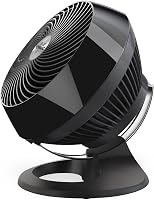
A pedestal fan is the better type when you want the airflow at body height and you can give up a little floor space. The Vornado 683DC is the strongest pedestal pick here because its DC motor moves air across a whole room while using up to 80 percent less energy than a traditional AC fan.
A pedestal fan raises its head on a stand so the airflow reaches a sofa, a desk or a bed. That matters because cool air settles low.
A fan sitting on the floor blows at your feet, while one at 32 to 38 inches blows where your body actually is.
The variable speed control on the Vornado lets you dial the airflow from a gentle breeze to full circulation. A DC motor makes that range easier to run quietly and cheaply.
Vornado says its Vortex design moves air up to 80 feet with deep-pitched blades and a spiral grille.
The base is the trade-off. A pedestal fan needs a footprint of about 18.5 inches square for the Vornado, so it takes more floor than a tower.
In a small bedroom that base can crowd a dresser or a door swing. Assembly is tool free on this model.
Pick a pedestal fan for a bedroom or living room where the fan will stay put. Pick a tower instead if the floor space is genuinely tight.
When should you choose a tower fan?
Choose a tower fan when floor space is tight but you still want airflow across a large living room. The Lasko Elevation DC Tower Fan (EST100) is the tower pick here because it reaches 54 inches tall on a base only about 14.6 inches square, with eight speeds and a remote.
A tower fan stacks its blades vertically, so it gives you height without a wide base. That makes it the easiest type to tuck beside a sofa, a desk or a corner.
The Lasko Elevation adjusts from 42 to 54 inches, so you can raise the airflow to your seated or standing height.
The remote handles power, eight speeds, four wind modes and a 12-hour timer. The AirSense feature adjusts speed as the room temperature changes.
Lasko rates it at 24 dBA on low speed, quiet enough for a call or a nursery.
The airflow is the trade-off. Lasko rates this model at 240 CFM, far below a high velocity floor fan.
The 90-degree oscillation spreads that air across the room, but it is tuned for gentle comfort rather than blasting a workspace. The 40 ft/s airflow reaches up to 60 feet, so it still stirs a large living room.
Pick a tower fan when space and quiet matter more than raw power. Skip it if you need to cool a garage or a gym.
Which type works best as an air circulator?
An air circulator works best when the goal is to mix the air in a whole room rather than cool one spot. The Vornado 683DC is the circulator here because its Vortex design moves air up to 80 feet through deep-pitched blades and a spiral grille, so it reaches every corner.
A circulator differs from a standard floor fan in how it shapes the airflow. Instead of a wide, soft breeze, it pushes a focused column of air that travels across the room and stirs the air in the process.
That evens out temperature and helps a room feel fresher without a strong draft on one person. The pedestal form adds height control, so you can aim it across the room at chest height rather than at the floor.
The 80 percent energy saving from the DC motor matters here because circulators often run for long hours. That makes the circulator type the practical choice for everyday background airflow.
The trade-off is that a circulator is less direct than a high velocity fan. It will not blast cool air at you in a hot workshop the way the Amazon Basics fan does.
It is built for comfort across a space, not for a targeted cooling jet.
Pick a circulator for steady, even comfort in a living room or bedroom. Pair it with open windows or a ceiling fan to move air through the house.
What size floor fan do you need for your room?
Floor fan size comes down to room size and how close you sit to the fan. A room up to about 150 square feet works with a 240 to 1,000 CFM fan, a room of 200 to 400 square feet suits 1,000 to 2,000 CFM, and a garage or open space needs 2,000 CFM or more.
Head size follows: 12 to 16 inches for a small room, 20 inches for a big space.
The 20-inch Amazon Basics at 3,542 CFM is the one for a garage, gym or workshop. Its 3 speeds and tilt head let you aim the air where the work happens.
A 16-inch or smaller fan suits a bedroom or home office. The 240 CFM tower is enough for a small room because oscillation and height spread the air, while a high velocity fan there would be overpowered and loud.
Height matters as much as width. A pedestal at 32 to 38 inches puts air at seated body height, and a fan at ankle height cools your feet and not much else.
Measure before you buy. The 20-inch high velocity fan takes about 9.45 by 23.43 inches of floor, while the tower needs only about 14.62 inches square.
Pick the smallest fan that meets the room's airflow need. A bigger fan on low is quieter than a small fan on high, but it takes more floor space.
Which type fits a garage or workshop?
A high velocity floor fan fits a garage or workshop because it moves the most air and stands up to a demanding space. The Amazon Basics 20-inch fan is the pick here, with 3,542 CFM of airflow, a metal housing and three aluminum blades.
The ETL listing matters in a garage. It means the fan meets North American safety standards for electrical appliances, which counts for more around tools and vehicles.
Metal also handles dust and knocks better than a plastic tower.
The tilt head lets you aim air at a workbench or a car. That helps when you are working under a hood or cleaning a floor.
Three speeds give you a strong blast or a gentler flow. Assembly is tool free, and the 125W motor draws little power for the air it moves.
The trade-off is footprint and looks. A 20-inch metal fan is bulky, industrial and loud on high, so it belongs in a garage rather than a living room or bedroom.
Pick a circulator or tower where you want comfort rather than a blast.
How do the four types compare on cost to run?
The four types differ mainly in running cost and noise. A DC motor fan uses up to 80 percent less energy than a traditional AC fan, so the Vornado 683DC and the Lasko Elevation are the cheapest types to run for long hours.
The Amazon Basics high velocity fan draws 125W. Running cost follows the motor.
A DC brushless motor like the Vornado's lets the fan run all evening on low without adding much to the power bill. The Lasko also uses a brushless motor and runs as quietly as 24 dBA on low.
The high velocity fan is built for short, strong bursts. Run it while you work in the garage, not all day in the living room.
Noise matters as much as power in a bedroom. A tower at 24 dBA on low is quiet enough to sleep beside, a pedestal on a low setting is also quiet, and a high velocity fan on high is not.
Match the type to the hours you will run it. Pick a DC fan for long daily use and a high velocity fan for short bursts, because the motor decides running cost more than the brand.
Which type is easiest to clean and maintain?
A high velocity floor fan is the easiest type to clean, because its open metal cage and aluminum blades wipe down quickly. A tower fan takes the most care because its blades sit inside a narrow housing that you cannot easily reach.
A floor fan with an open cage lets you clean the blades and the grille with a brush or a cloth. The metal blades on the Amazon Basics fan are flat and easy to wipe.
The open design also means less dust builds up in hidden places.
A pedestal fan like the Vornado needs the grille removed to clean the blades. The spiral grille has more surface area, so dust collects on it.
Vornado's design lets you take the front grille off for cleaning.
A tower fan is the hardest to clean. You can wipe the outer grille and the base, but the internal blades are hard to reach without taking the fan apart.
Our how to clean a floor fan guide covers the steps for each type.
The open-cage type also dries faster after cleaning. A closed tower housing can trap dust and moisture in the base.
A quick monthly wipe keeps any type running smoothly.
Pick an open-cage floor fan if you want easy cleaning. A tower fan needs more patience and a soft brush to reach the internal parts.
What else should you check before buying floor fans?
Before you buy, check the cord length, the outlet position and the safety listing. An ETL-listed fan like the Amazon Basics model meets North American safety standards, and a remote like the Lasko's saves you bending to the base.
These small details decide how well a fan fits daily use.
Check the control type. The Amazon Basics fan uses push buttons on the motor housing.
The Vornado puts its controls on the front of the fan head. The Lasko comes with a remote and a touchpad.
Pick the control type you will actually use from the sofa or the bed.
Check the base footprint against the spot. A 20-inch fan needs about 23 inches of width.
A tower needs about 15 inches square. A pedestal fan needs about 18.5 inches square.
Measure the corner or the gap before you order.
Check the height range. A tower that reaches 54 inches puts air at seated and standing height.
A floor fan at ankle height does not. A pedestal that adjusts from 32 to 38 inches covers a sofa or a desk.
Pick the fan whose controls, base and height match your room. These details matter more than a small difference in airflow.
Which types of floor fans should you buy?
Buy a high velocity fan for a garage or big space, a pedestal or tower fan for a living room or bedroom, and a circulator when you want the whole room's air to move. Our overall pick for most homes is the Vornado 683DC Pedestal Air Circulator, because its DC motor moves air across a whole room while using up to 80 percent less energy than a traditional fan.
If raw airflow is the priority, the Amazon Basics 20-inch high velocity fan is the pick. Its 3,542 CFM airflow and metal build suit a garage, gym or workshop.
It is the type to choose when you need to move a lot of air and noise is not the main concern.
If floor space is tight, the Lasko Elevation tower fan is the pick. Its small base, remote and 24 dBA low speed make it easy to live with in a bedroom or a living room corner.
Start with the room size, then pick the type. Our best floor fan roundup compares the top models in each type, and the Lasko Wind Machine review covers a high velocity option in more detail.
Once you have your type, measure the spot and check the controls before you order.
Frequently asked questions
Are tower fans or pedestal fans better for a bedroom?
A pedestal fan suits a bedroom better when you want airflow at bed height and can spare the floor space. A tower fan is the better pick when the room is small and you would rather not have a wide fan base near the bed.
Do floor fans use a lot of electricity?
Floor fans use little electricity compared with an air conditioner. A DC motor fan like the Vornado 683DC uses up to 80 percent less energy than a traditional AC fan, so it is the cheaper type to run for long hours.
Can I use a floor fan to cool a whole house?
A single floor fan cools the people in front of it and stirs the air in one room. To move air through several rooms, place a circulator near a doorway and use it alongside open windows or a whole house fan rather than relying on one floor fan.