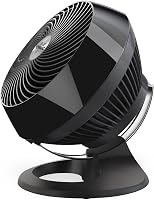
Do Any Dyson Fans Actually Cool the Air?
No. A standard Dyson fan does not cool the air. It moves air like any other fan, so you feel cooler through airflow, not a drop in room temperature. Only models sold as purifier and heater combos change the air in any other way.
On this page (9 sections)
- Do any Dyson fans actually cool the air?
- Why does a fan feel cold on your skin?
- What do Dyson fans actually do well?
- Can a Dyson fan be made to blow cold air?
- Which fans move air best for the money?
- How do you place a fan so the air feels colder?
- Why does a Dyson fan feel weaker than a cheap fan?
- How do you cool a room when a fan isn't enough?
- The bottom line
No. A standard Dyson fan does not cool the air.
It moves air like any other fan, so you feel cooler through airflow, not a drop in room temperature. Only models sold as purifier and heater combos change the air in any other way.
That answer surprises people who expect a premium bladeless fan to work like an air conditioner. The confusion comes from the breeze on your skin, which feels cool even when the air itself is warm.
Here is what is really happening and how to get the most cooling from a fan, Dyson or otherwise.
Do any Dyson fans actually cool the air?
No Dyson fan lowers the temperature of a room. Every model moves existing air, and the motor and electronics add a little heat rather than remove it.
The bladeless loop shape changes how the air leaves the fan, not how cold it is.
The cooling you feel is evaporative. Air moving over skin speeds up sweat evaporation, and that process pulls heat away from your body.
Sit still in the same warm room with the fan off and the feeling disappears within minutes.
Dyson's purifier and heater models have extra jobs: filtering air or warming it. Neither one chills the air on a hot day.
A fan next to an open window at night will do more for your comfort than any standalone fan in a closed room.
So if the question is "do any dyson fans actually cool the air," the honest answer stays the same across the range. They move and filter air well; they do not refrigerate it.
Why does a fan feel cold on your skin?
Because moving air strips heat from your skin faster than still air does. Your body constantly releases moisture, and a breeze carries that moisture away, which cools the surface.
The effect has a limit. In very humid air, sweat evaporates slowly and a fan feels less refreshing.
In dry heat, the same fan feels noticeably cooler because evaporation runs at full speed.
This is also why fans help less in an empty room. A fan cools people, not furniture or walls.
Running one in a vacant bedroom only adds a small amount of motor heat to the space.
That said, a fan still helps air mix. Stirring warm air near the ceiling with cooler air near the floor makes a room feel less stuffy, even without a temperature drop.
What do Dyson fans actually do well?
They move air quietly in a compact, easy-clean package. The bladeless loop is simple to wipe down, there are no exposed blades to dust, and the airflow is smooth rather than choppy.
Dyson models with a HEPA filter also trap particles, which matters in a bedroom or for allergy-prone households. Some run as heaters in winter.
Those functions are real, and they are why people pay more for the brand.
What you are not buying is refrigeration. A Dyson fan at full speed in a sealed warm room will keep that room at about the same temperature.
The same is true of a basic box fan, so the extra cost goes to design, filtration and noise rather than raw cooling power.
If quiet operation is your priority, a well-made tower fan gets you close for less. Our guide to tower fan vs floor fan compares how each type handles noise and airflow.
Can a Dyson fan be made to blow cold air?
No, and you should not try. Dyson fans are not built to hold ice, water or frozen packs.
Putting any of those near the intake risks water reaching the electronics and creating a shock hazard.
The safe way to get colder air out of a fan is to cool the air going into it. Put the fan in front of an open window after sunset, when outside air is cooler than indoors.
Or use it to push air from a cool hallway into a warm bedroom.
You can also improve the breeze itself. Our guide to how to make a fan blow cold air covers placement tricks that work with any fan.
For real temperature drop, the tool is an air conditioner. A fan only helps you feel the cool air an AC unit produces, or pulls in cooler air from outside.
Which fans move air best for the money?
A tower fan or air circulator gives you strong airflow for far less than a Dyson. Both move air the same way a Dyson does, and both rely on the same skin-cooling effect.
Here are three that suit different rooms.
The Levoit tower fan is the pick for bedrooms because its height adjusts from 36 to 47 inches and its noise drops to 28dB. That makes it easy to aim airflow at a high bed without waking anyone.
For big rooms and strong airflow, the DREO tower fan is a 42-inch model rated at up to 28 ft/s with a quiet DC motor. Its 9 speeds and 4 modes cover most situations.
If you want whole-room circulation rather than a directed breeze, the Vornado 753 OSC oscillates to spread air around the space. Its 3 speeds and auto mode adjust the airflow to room conditions.
Each of these fans cools you the same way a Dyson does: by moving air over your skin. None of them chills the room, and that is not a flaw.
It is how fans work.
How do you place a fan so the air feels colder?
Aim the fan across you, not at the wall. A direct breeze on your skin is what makes a warm room feel tolerable.
Blowing at a wall wastes the airflow.
Point the fan slightly upward so it reaches your face and chest, where skin is exposed. In a bedroom, set it to oscillate so the breeze sweeps over the bed rather than hitting one spot.
At night, face the fan toward the window to exhaust warm room air, or turn it inward to pull in cooler outdoor air. Which direction works better depends on where the cool air is, and our guide to fan direction to cool a room explains how to choose.
Close doors to rooms you are not using so the fan moves a smaller volume of air. A fan pushing cool air through one doorway does more than one stirring a whole floor.
Why does a Dyson fan feel weaker than a cheap fan?
It usually doesn't, but the airflow is spread out. Dyson fans push air through a wide loop, so the breeze is broad and gentle rather than a hard column.
That feels softer on your skin even when the total airflow is similar.
Small fans also lose force with distance. A compact unit sitting on a desk feels strong up close and weak across a room.
A tower fan or circulator with a larger body pushes air farther.
If you want a strong, directed breeze, choose a fan with a narrow output and a higher airflow rating. If you want a soft, even flow for sleeping, a wide loop is the better match.
Either way, do not expect a smaller fan to cool a large room on its own. Fan cooling scales with airflow and placement, not with brand name.
How do you cool a room when a fan isn't enough?
Use a fan to support real cooling, not replace it. The strongest setup is a fan plus a source of cooler air: an open window at night, a shaded room during the day, or an air conditioner.
Close blinds on sun-facing windows before the afternoon heat builds. Run the fan only in rooms you occupy, and turn it off when you leave.
Our guide to how to cool a room with a fan walks through the full routine, including cross-ventilation with two fans.
If you already own a Dyson fan, use it as a bedroom fan for its quiet running and smooth airflow. Just do not expect it to bring down the room's temperature.
The cooling comes from the breeze and from keeping hot air out.
The bottom line
No, Dyson fans do not cool the air.
A Dyson fan moves air, and the cool feeling comes from that air passing over your skin. Buy one for quiet running, easy cleaning or filtration, not for room cooling.
If your goal is comfort on a hot night, a well-placed tower fan or circulator at a fraction of the cost does the same job. Pick the Levoit for a high bed, the DREO for a large room and the Vornado for whole-room circulation.
Then spend the saved money on an air conditioner if the heat is really the problem.
Frequently asked questions
Why does a Dyson fan feel cool if it doesn't chill the air?
Moving air carries heat away from your skin faster than still air does. The effect fades once you step out of the breeze.
A ceiling fan works on the same principle, and so does a cheap box fan.
Can I add ice to a Dyson fan to make it blow cold air?
No. Dyson fans are not designed to hold water or ice, and adding either risks damage and a shock hazard.
For a real chill, cool the room's air with an air conditioner or place the fan near an open window at night.
Is a Dyson fan worth it if it doesn't cool the room?
It can be, for the reasons people buy one: quiet running, a compact bladeless design and easy cleaning. If your main goal is lowering room temperature, spend the money on an air conditioner or use fans to push air through the house.
What is the cheapest way to feel cooler with a fan?
Place the fan so it blows across you rather than at a wall. At night, aim it inward from a window to pull in cooler outside air.
Running a fan in an empty room only wastes power, because there is no skin for the breeze to cool.