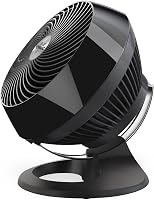
What Is a High Velocity Fan, and Do You Need One?
A high velocity fan moves a focused stream of air at high speed, often for cooling or ventilation in a garage, workshop, or other large space. It moves air, but it doesn't lower the room's temperature.
On this page (8 sections)
- What is a high velocity fan?
- How is it different from a regular room fan?
- Where does a high velocity fan work best?
- Does high velocity mean it cools a room faster?
- What should you check before choosing one?
- Which high velocity fan fits each kind of use?
- What are the limits of a high velocity fan?
- How should you choose a high velocity fan?
A high velocity fan moves a focused stream of air at high speed, often for cooling or ventilation in a garage, workshop, or large room. It moves air, but it doesn't lower the room's temperature.
The right choice depends on where you need airflow and how you want to use it. A portable blower suits directed airflow for a task, while a larger floor fan may suit broader circulation.
What is a high velocity fan?
A high velocity fan is designed to move air in a strong, focused stream. Models can be floor fans or compact blower fans, and may have adjustable tilt or a pivoting head to direct that stream.
The name doesn't guarantee a particular airflow level, noise level, or room coverage. Check a fan's stated airflow and physical design, then match them to your space and the direction you need.
A high velocity fan can make you feel cooler by moving air over your skin. It doesn't refrigerate air, so it won't reduce the room's temperature the way an air conditioner does.
How is it different from a regular room fan?
A high velocity fan usually directs a stronger stream toward a specific area, while many household fans are chosen to spread air around a room or sweep it back and forth. The design and airflow vary by model, so compare the actual features.
A tower fan has a slim footprint, and some models oscillate to distribute airflow across a wider area. A pedestal or floor fan may also have an adjustable head.
Our guide to room fans for cooling explains the main types and where each can fit.
You can also compare tower fans and floor fans if you're choosing between a compact vertical fan and a larger floor model. Room layout, available floor space, and preferred airflow direction all matter.
Where does a high velocity fan work best?
It works best where you want direct airflow, such as a workspace, garage, or area where you need air to move across a person or surface. A portable model can be moved between tasks, while a larger floor fan may suit an open area.
A blower fan's pivoting head can aim air toward a floor or work surface. For drying paint or a wet floor, place it where the moving air can reach the surface without getting in the way.
In a garage or shop, keep the fan stable and route its cord where people won't trip over it. Don't use a fan in wet conditions unless the manufacturer's instructions allow it.
For broad garage cooling, start with our guide to shop fans for a hot garage. If your goal is to move air through a larger home space, see how to cool a room with a fan.
Does high velocity mean it cools a room faster?
No. High velocity means the fan is built to move air forcefully, not to remove heat from a room.
The breeze can help you feel cooler, but the room's air temperature won't drop from the fan alone.
For comfort, aim the airflow toward people or the area where they spend time. If the room is hot, also reduce heat coming in through sunny windows, use ventilation when outdoor air is cooler, or run air conditioning if available.
Fan position changes how the moving air feels. Our guide to fan direction for cooling a room covers placement and airflow direction.
Is a high velocity fan a good choice for sleeping?
It may suit you if you want a direct breeze and don't mind a floor fan nearby. Consider the fan's sound, size, and airflow direction before placing it next to a bed.
A strong stream aimed at one spot can feel uncomfortable to some people, and a fan that stays in one position may not distribute air across the room. If you're choosing a bedroom fan, compare quiet tower fans for sleeping with models designed for stronger directed airflow.
What should you check before choosing one?
Start with the space, the direction of airflow, and the fan's size. Then check its airflow information, speed settings, adjustability, portability, and any power features you need.
- Airflow: Compare the stated airflow figures when available, but don't assume they predict comfort in every room.
- Direction: A tilt or pivot feature can help aim air at a specific area.
- Size: Measure floor space and the path you'll use to carry the fan.
- Controls: Check how many speed settings it offers and how they're adjusted.
- Power: Look at the cord length and outlet details for your intended setup.
- Noise: Consider whether the fan will run near people who need a quiet space.
These points help narrow the choices, but no single label tells you how a fan will feel in your room. For large open spaces, see best fans for large rooms.
Which high velocity fan fits each kind of use?
Choose a compact blower for aimed airflow and a larger floor fan for a broader open area. The three options below show different sizes and designs, based on their stated features.
When does the Lasko U15617 make sense?
The Lasko U15617 suits a workspace where you want a portable blower with a pivoting head. It has 3 speeds, up to 375 CFM, a carry handle, and two grounded accessory outlets.
Its 10 ft cord and circuit breaker with reset button are useful features to consider for a task area. Check that its blower shape and footprint suit where you plan to set it.
When does the Tornado 20-inch floor fan make sense?
The Tornado suits an open area where you want a 20-inch metal floor fan with adjustable tilt. It has 3 speeds, airflow figures of 4,750, 4,200, and 3,800 CFM, and a vertical tilt range of 120 degrees.
It has a built-in carry handle and a 6 ft cord. Its metal construction and floor-mount design make it a different fit from a compact utility blower.
When does the Lasko U12104 make sense?
The Lasko U12104 suits smaller jobs where you want a compact blower that can aim airflow in several directions. It has 3 speeds, up to 289 CFM, a 270-degree pivot, and a carry handle.
Its two grounded outlets and 10 ft cord may help when you need nearby power for tools. Compare its smaller size and airflow with the U15617 before choosing between the two.
What are the limits of a high velocity fan?
A high velocity fan moves air but doesn't cool the room, remove humidity, or replace ventilation equipment designed for a specific hazard. Don't assume a fan is suitable for an industrial setting just because it's described as high velocity.
Use the fan as directed, keep its air path clear, and follow the manufacturer's safety instructions. For fumes, dust, or other hazards, use equipment intended for that job and follow applicable safety guidance.
A focused stream may also be too strong for a small room or a person sitting close to the fan. If you want air to move more gently around a bedroom or living room, compare other room fan types.
How should you choose a high velocity fan?
Choose a compact pivoting blower if you need to direct air at a work area or move the fan between tasks. Choose a larger tilt-head floor fan if you want a larger fan for an open space and have room to place it.
For home cooling, decide whether you want a focused breeze or room-wide circulation. Then compare fan size, airflow, controls, cord length, and placement against your space before you buy.
Frequently asked questions
What does a high velocity fan do?
A high velocity fan moves a strong stream of air across a focused area. People use these fans for air circulation, ventilation, and drying in places such as garages and workshops.
Like other fans, they don't cool the air itself, so they can't lower the room's temperature.
Is a high velocity fan good for a bedroom?
It can work in a bedroom if you want direct airflow, have space for a floor fan, and can tolerate its sound. A focused stream may feel too strong for some sleepers, and the fan won't cool the room itself.
Compare it with quieter room options before choosing.
Does a high velocity fan use more electricity?
Power use depends on the fan's motor and speed setting, so the high velocity label alone doesn't tell you how much electricity it uses. Check the fan's electrical information and estimate use from its wattage and hours of operation.
Our guide explains how much electricity a fan uses.
Can a high velocity fan cool a large room?
A high velocity fan can circulate air across part of a large room, especially when aimed toward an occupied area. It doesn't lower the room temperature, and one fan may not move air evenly across an open floor plan.
See our guide to fans for large rooms for other options.